Go Land Routes

Below are the pictures and writings from the entire trip. The newest is at the top and the first at the bottom. The trip started on March 16th and ended on April 9th.

Home to the north April 9th

The rest of the journey went smoothly from Copenhagen to Malmö and on the night train to Luleå in northern Sweden. From there, the rest of the journey to Haapranna.

Thanks for following my journey.

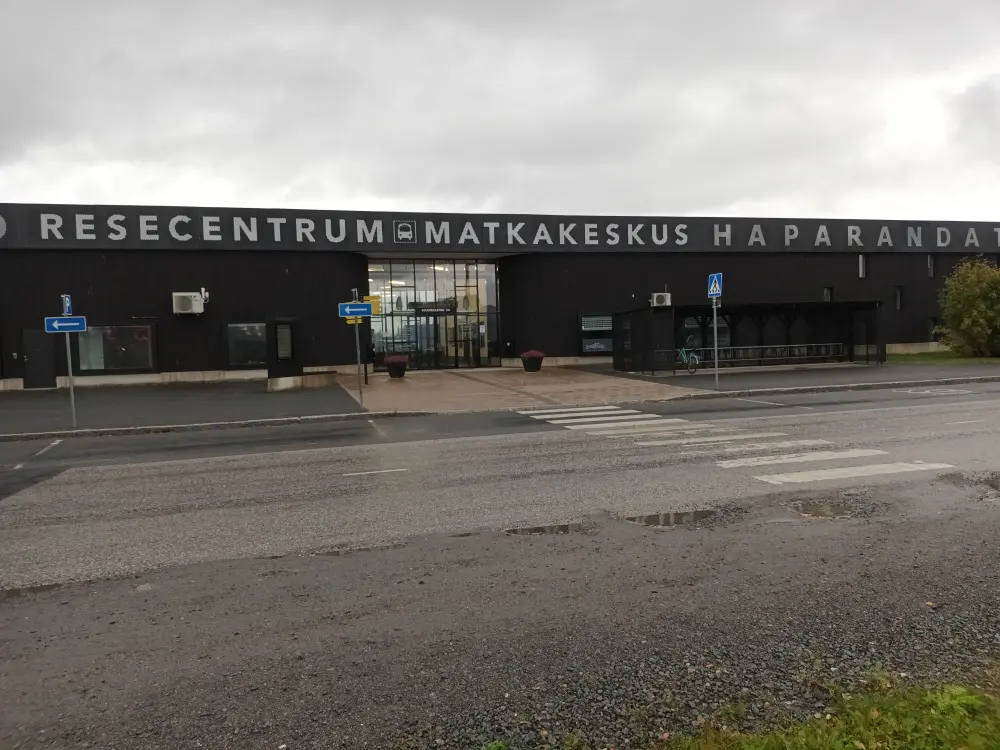
Haparanda-Tornio travel center.
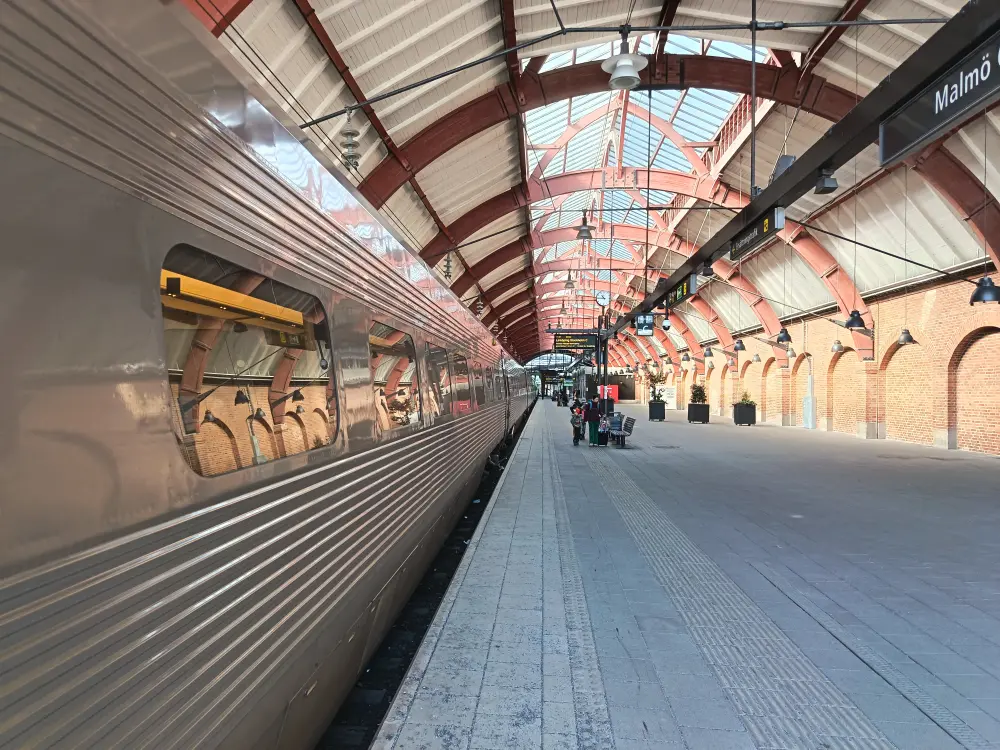
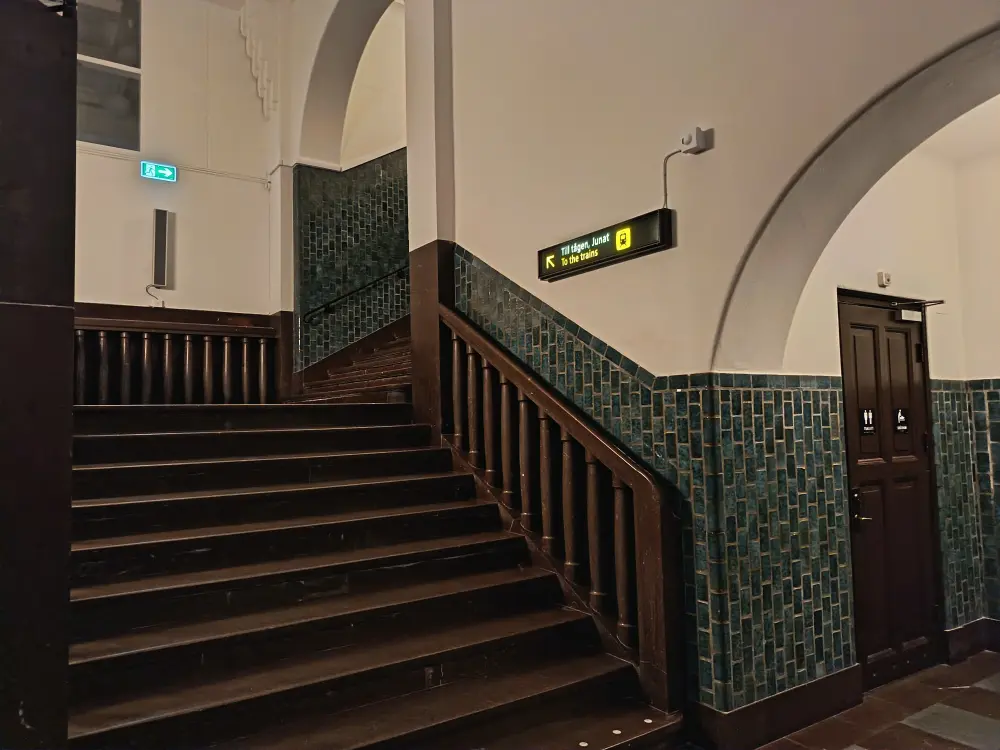
The train platform at Malmö train station and the train departing.
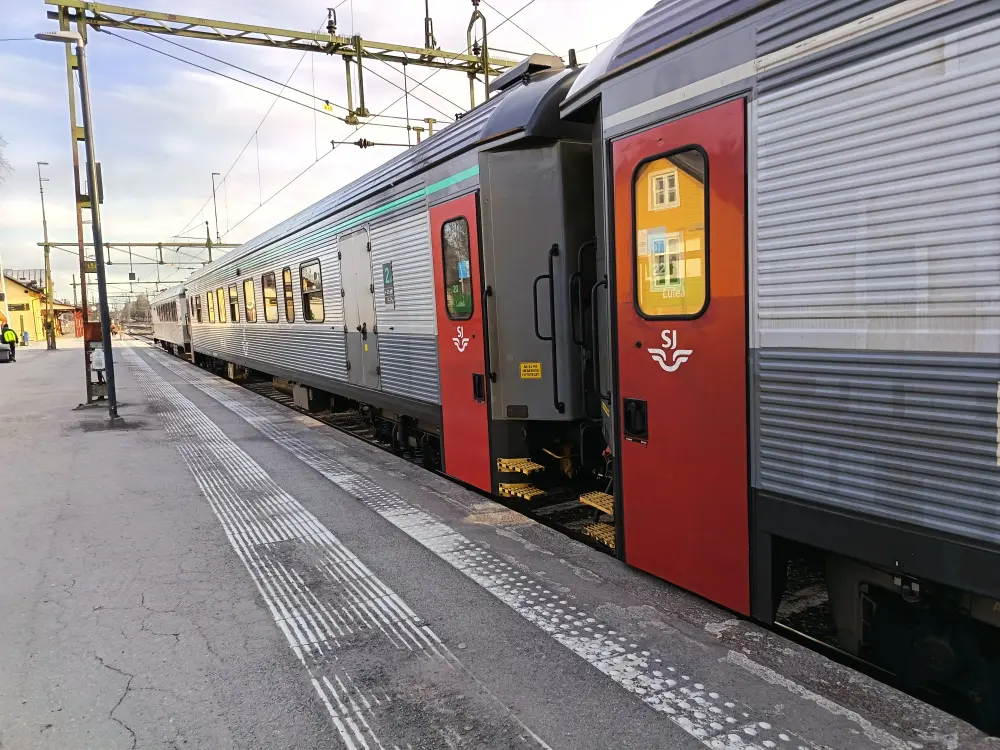
The train from Stockholm has arrived at Luleå station.
The train from Stockholm has arrived at Luleå station. Mornings in the north are colder than in the south.
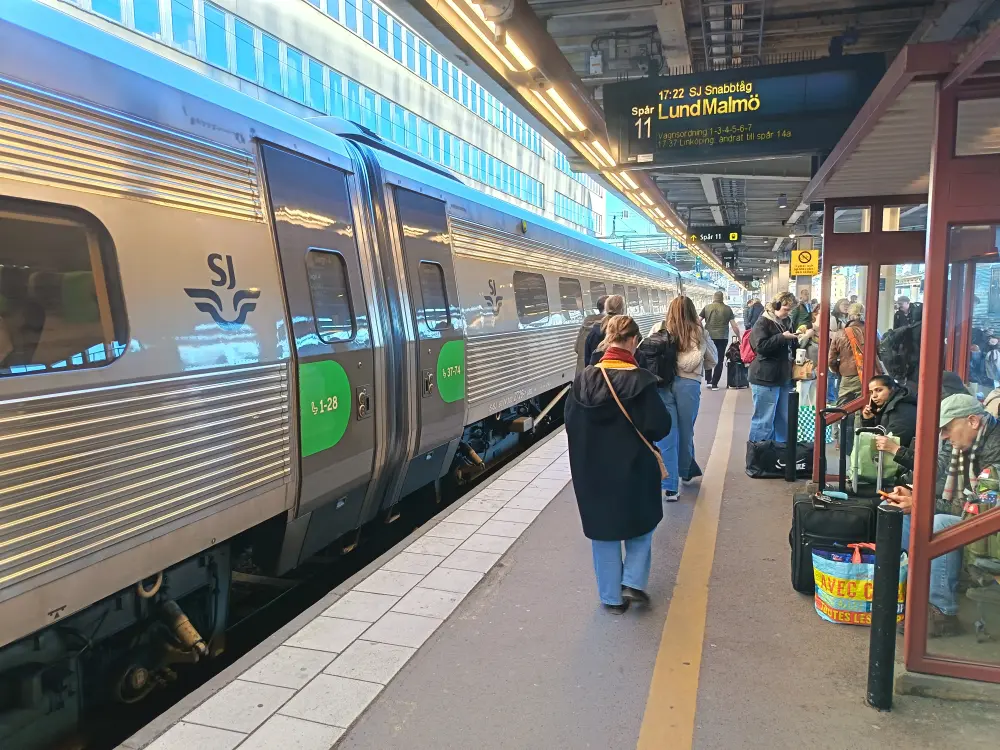
The train platform at Stockholm train station and passengers disembarking from the train.
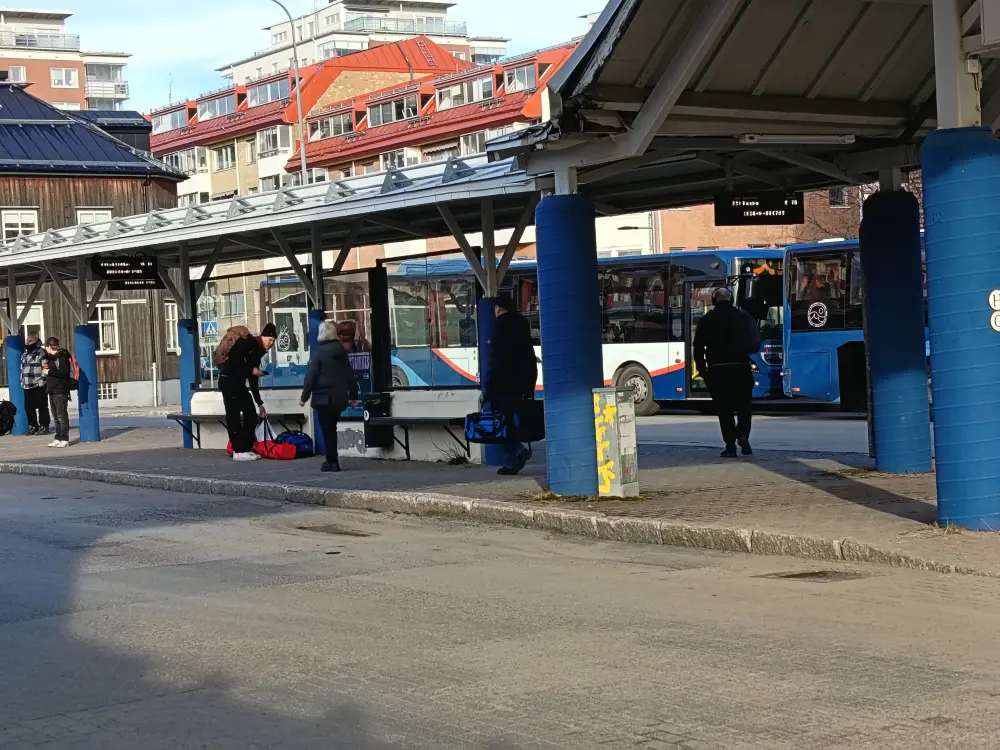
Passengers wait for the bus gate at Luleå bus station.
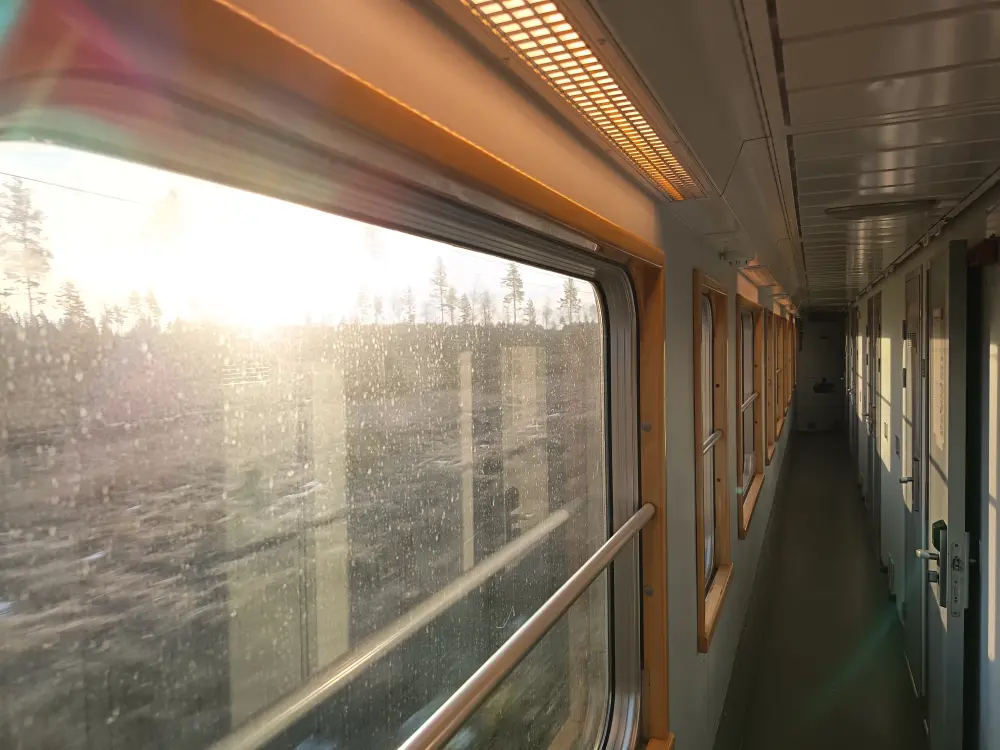
A morning landscape is visible in the corridor of the Stockholm-Lulea sleeping car on the train.
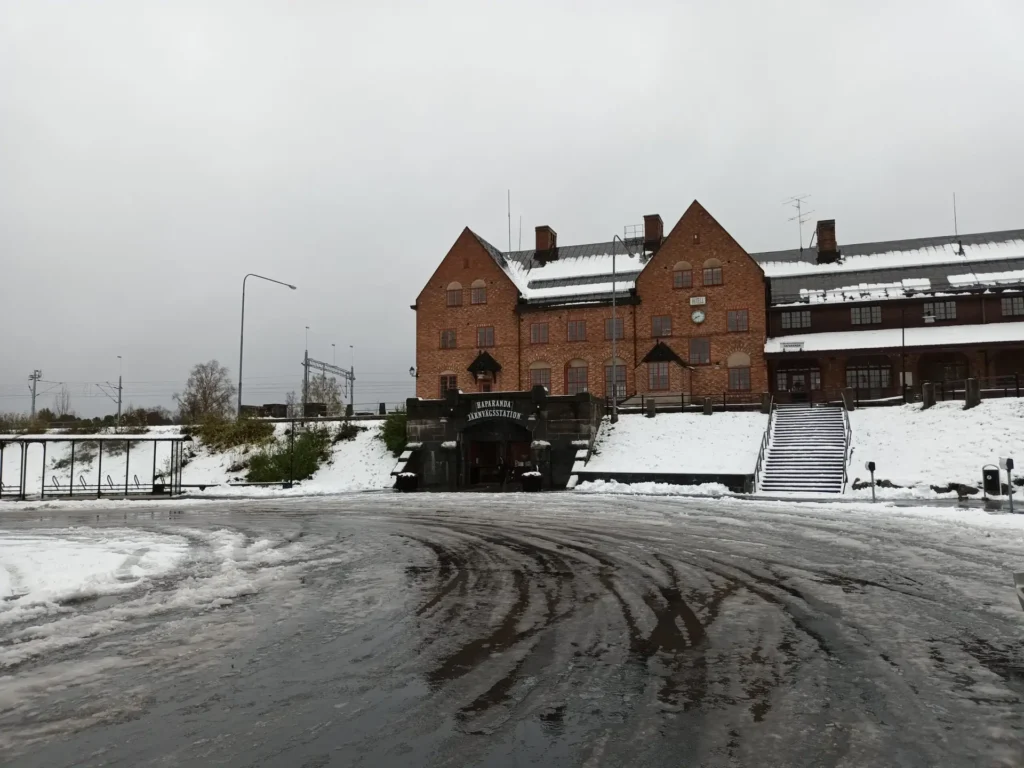
Haparnta train station.
Haparnta train station. The beautiful station building was renovated twenty years ago.
7 April in Helsingør

Two routes to travel between Sweden and Denmark

The Øresund Bridge and the Helsingør–Helsingborg ferry serve as the two primary arteries between Denmark and Sweden. While the bridge is the busier route—handling approximately 8 million vehicle crossings in 2025 as the main link between Copenhagen and Malmö—the ferry remains a highly popular and thriving alternative.

Despite the bridge’s convenience for heavy rail and southern commuting, the ferry route recently hit a 25-year high with over 6.3 million annual passengers. It remains a strategic shortcut for travelers heading from northern Denmark toward Gothenburg or Oslo, saving a significant detour through the capital.

The ferry route is also favored for its lower costs and unique “travel experience.” Many passengers board the electric-powered fleet specifically to “tura”—a local tradition of riding back and forth to enjoy onboard restaurants and shops. In short, the bridge provides high-speed metropolitan transit, while the ferry offers a cost-effective, scenic, and environmentally friendly connection that continues to grow in popularity.

7 April in Helsingør

Two routes to travel between Sweden and Denmark

The Øresund Bridge and the Helsingør–Helsingborg ferry serve as the two primary arteries between Denmark and Sweden. While the bridge is the busier route—handling approximately 8 million vehicle crossings in 2025 as the main link between Copenhagen and Malmö—the ferry remains a highly popular and thriving alternative.

Despite the bridge’s convenience for heavy rail and southern commuting, the ferry route recently hit a 25-year high with over 6.3 million annual passengers. It remains a strategic shortcut for travelers heading from northern Denmark toward Gothenburg or Oslo, saving a significant detour through the capital.

The ferry route is also favored for its lower costs and unique “travel experience.” Many passengers board the electric-powered fleet specifically to “tura”—a local tradition of riding back and forth to enjoy onboard restaurants and shops. In short, the bridge provides high-speed metropolitan transit, while the ferry offers a cost-effective, scenic, and environmentally friendly connection that continues to grow in popularity.

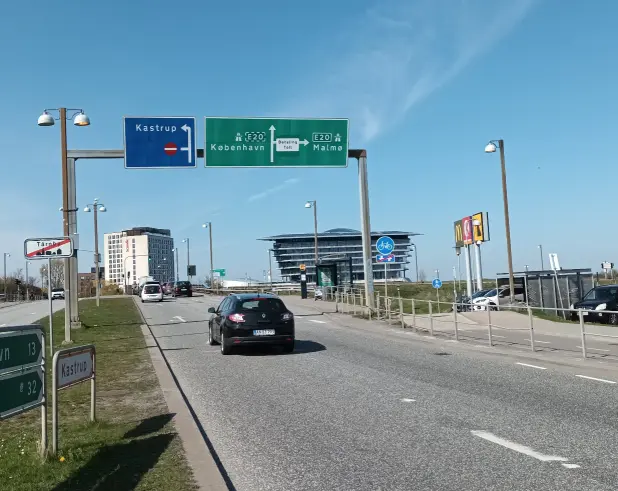
You can easily travel between Copenhagen and Malmö via the Øresund Bridge.
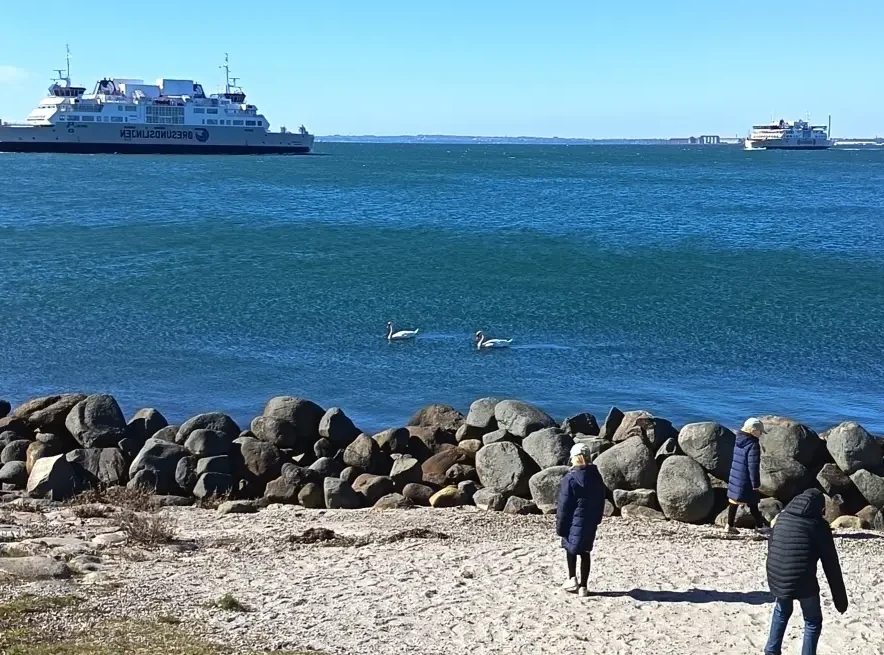
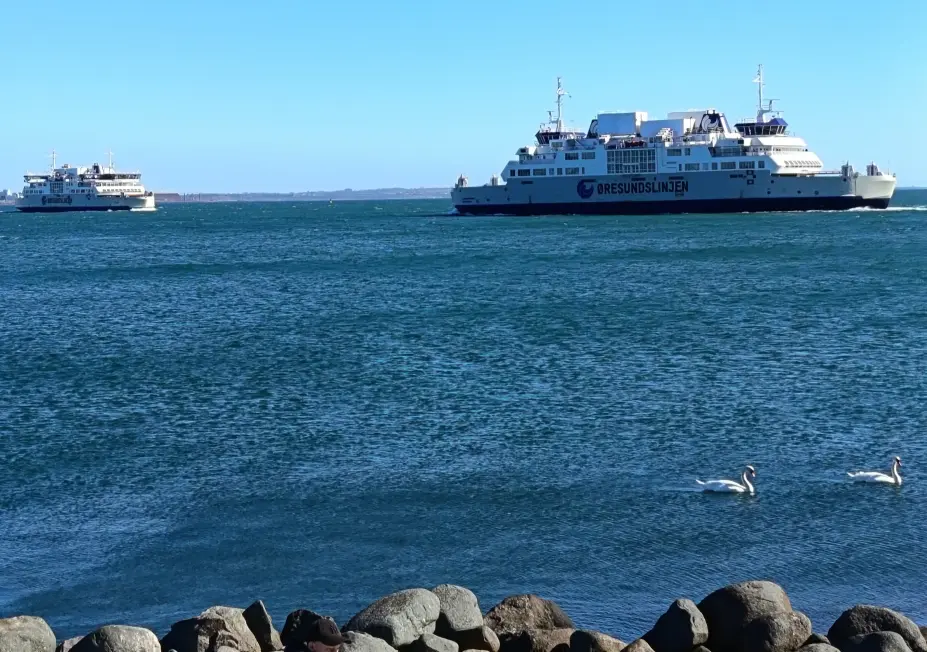
Ferries run frequently between Helsingør and Helsingborg.
7 April in Helsingør

Helsingør is almost attached to the Swedish mainland

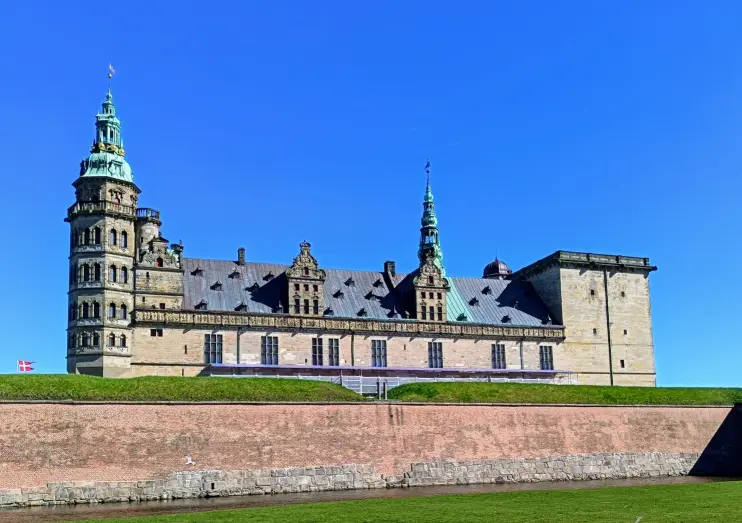
Helsingør is a historic coastal city located in the northeastern corner of Zealand, Denmark, just a stone’s throw away from Sweden. The city’s most famous landmark is the majestic Kronborg Castle, which serves as the setting for Shakespeare’s Hamlet and is a UNESCO World Heritage site.

Situated at the narrowest point of the Øresund strait, the city is a bustling hub; the ferry crossing to Helsingborg, Sweden, takes only 20 minutes. Transportation links to Copenhagen are excellent, with frequent train services reaching the capital in under an hour.

Helsingør charms visitors with its medieval atmosphere, narrow cobblestone streets, and the modern M/S Maritime Museum of Denmark. It is the perfect destination for travelers seeking a blend of cultural history, maritime flair, and easy accessibility.

Ferries between Helsingør in Denmark and Helsingborg in Sweden.
Kronborg Castle.
Kronborg Castle.
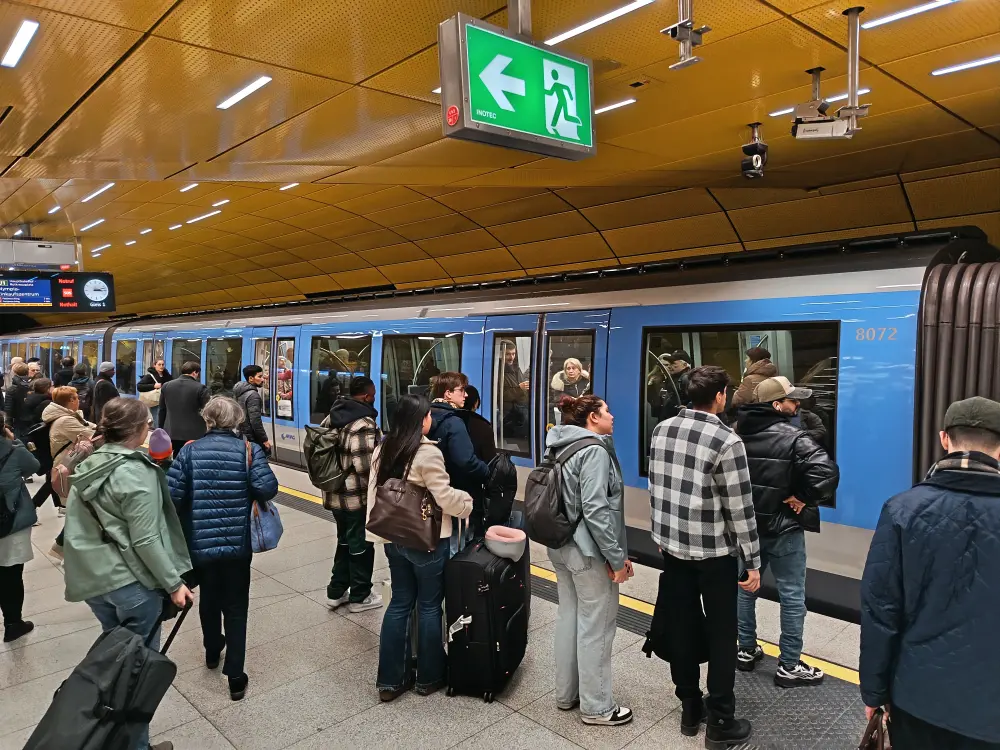
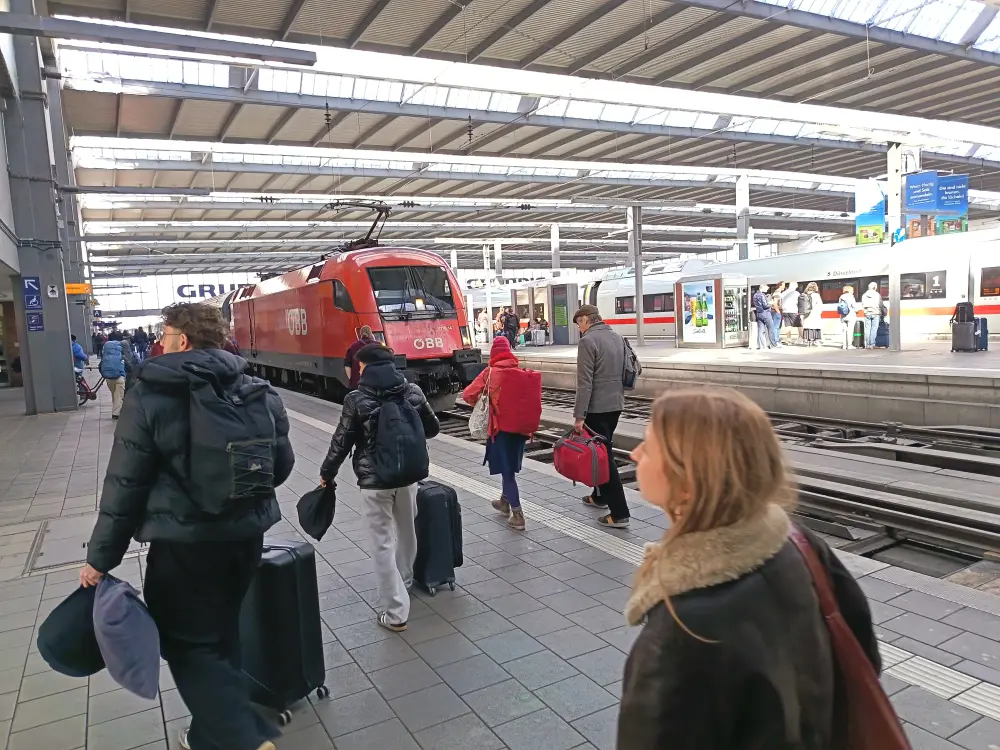
Rush hour on the Munich metro station platform.
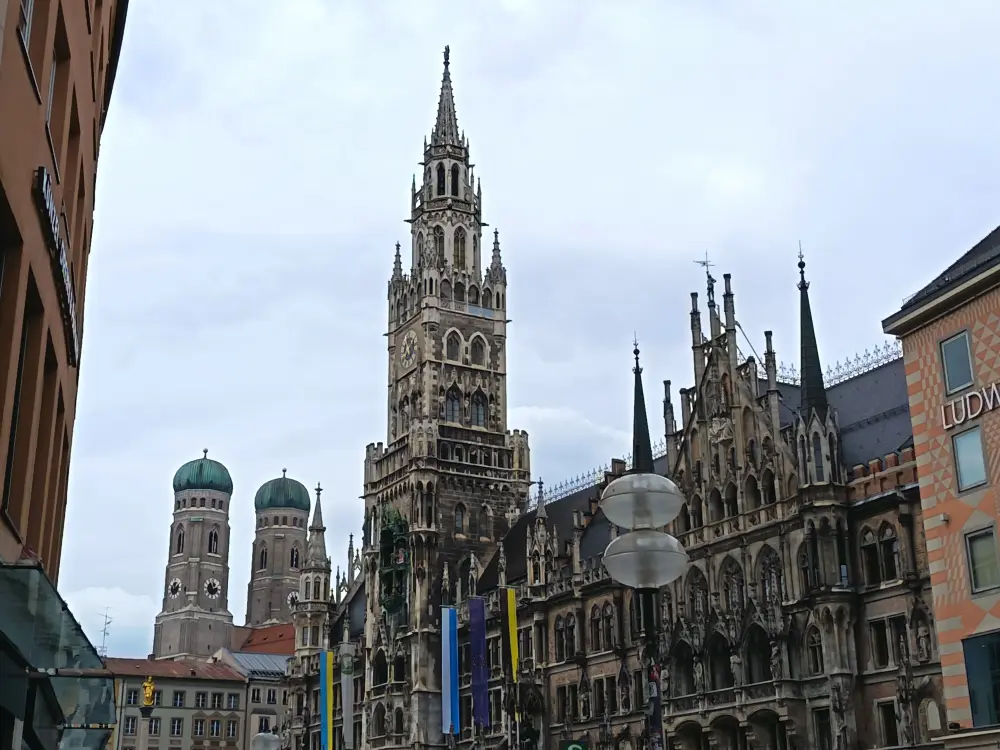
Famous churches in Munchen.

From Ljubljana, the journey continued by train to Munich. I was a bit nervous about how I would get there. There have been quite a few track works at times, and train connections have been replaced by buses. Everything went well and I was in Munich for three days, from where I continued to Hamburg and then to Odense in Denmark. From there, the journey continues on to Copenhagen.

The return trip home

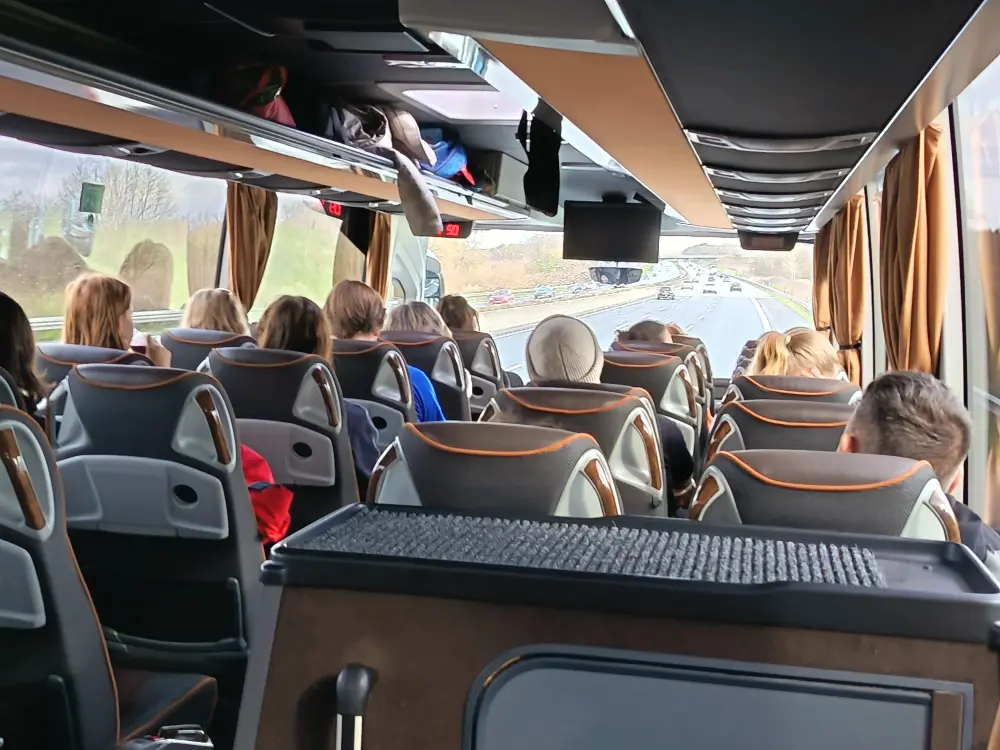
The train connection from Hamburg to Odense was replaced by buses.
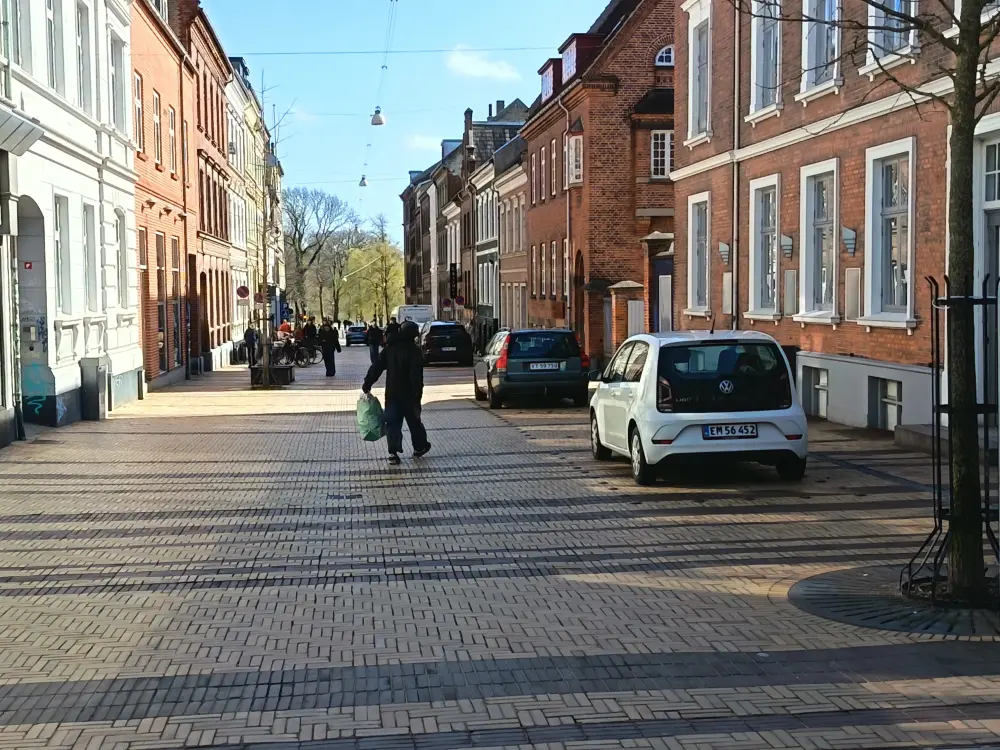
Odense is a cozy city in Denmark.

DB replaced the train service from Hamburg to Odense with several buses. The bus trip was a pleasant change after train journeys. From Odense, the ride continues on a train of the Danish DSB company. I was also trying to book a Swedish railway company SJ train ticket for the Copenhagen to Malmö route, but instead I got a bus connection. There is no problem with that, because I can travel with an Interrail pass. The final part of the journey to Stockholm goes by train. In Stockholm, I spend a day and continue by night train to Luleå, from where I continue by bus to Haparanda.

Ljubljana March 30 - April 1

Ljubljana is the capital and largest city of Slovenia. It is located between the Northern Adriatic Sea and the Danube region. It is the country’s cultural, educational, economic, political, and administrative center.
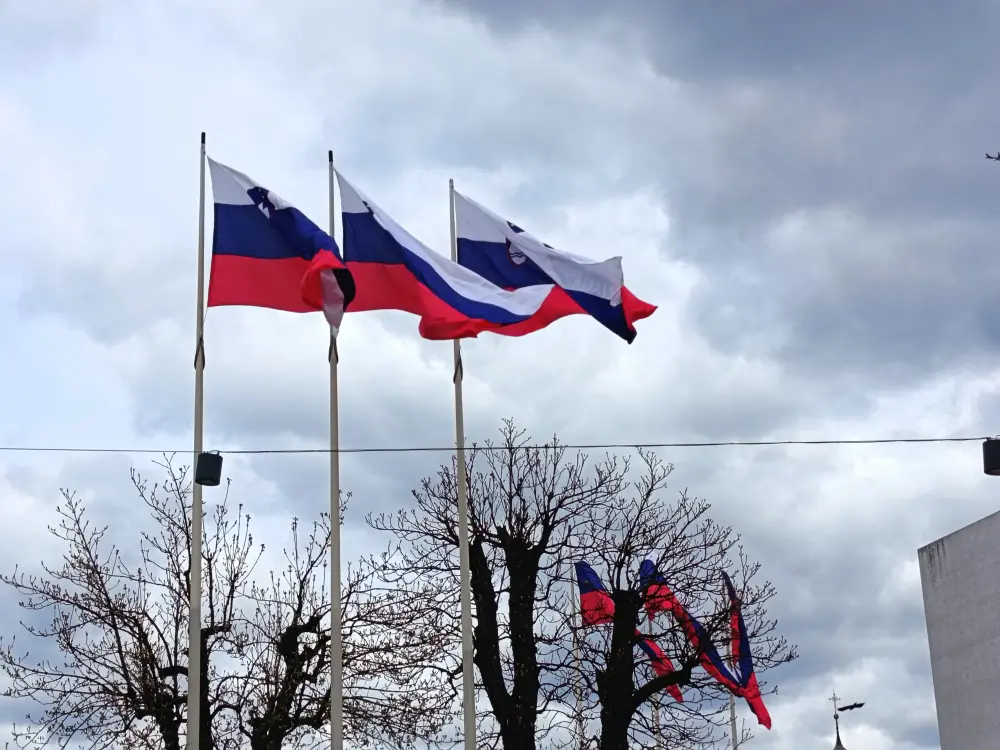
The Slovenian flag.
The Slovenian flag is white, blue, and red with horizontal stripes, and has the national coat of arms in the upper corner, symbolizing the country's history, nature, and national identity.
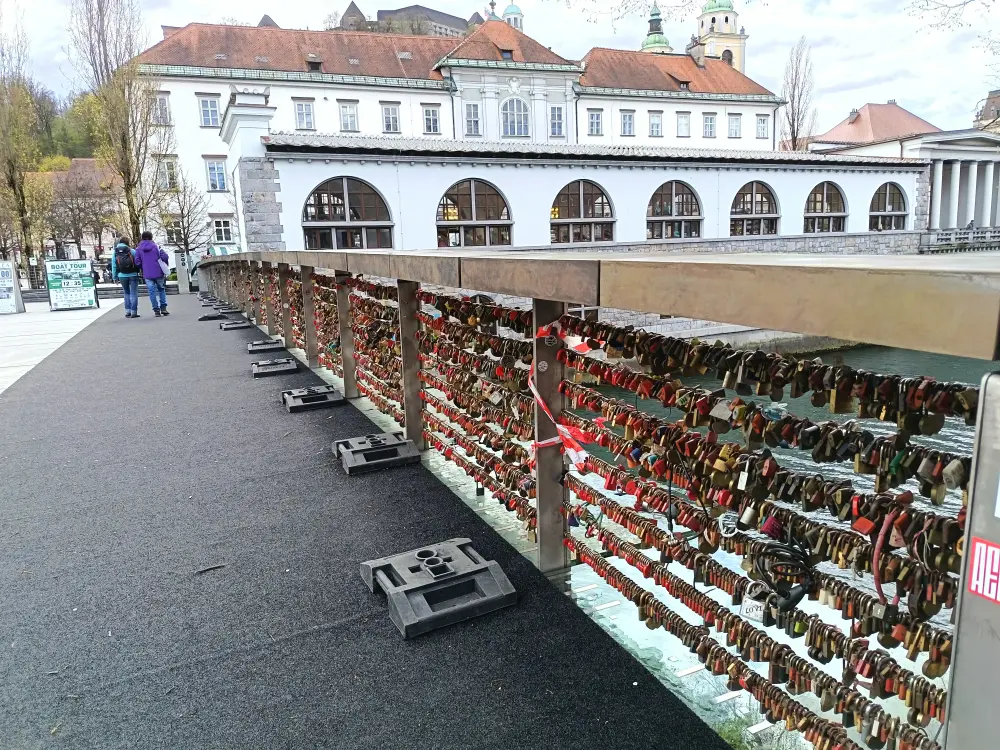
Love locks on the bridge railing in Ljubljana.
Love locks on the bridge railing in Ljubljana. Tromostovje is a complex of three bridges in Ljubljana, which cross the Ljubljanica River from Prešeren Square.
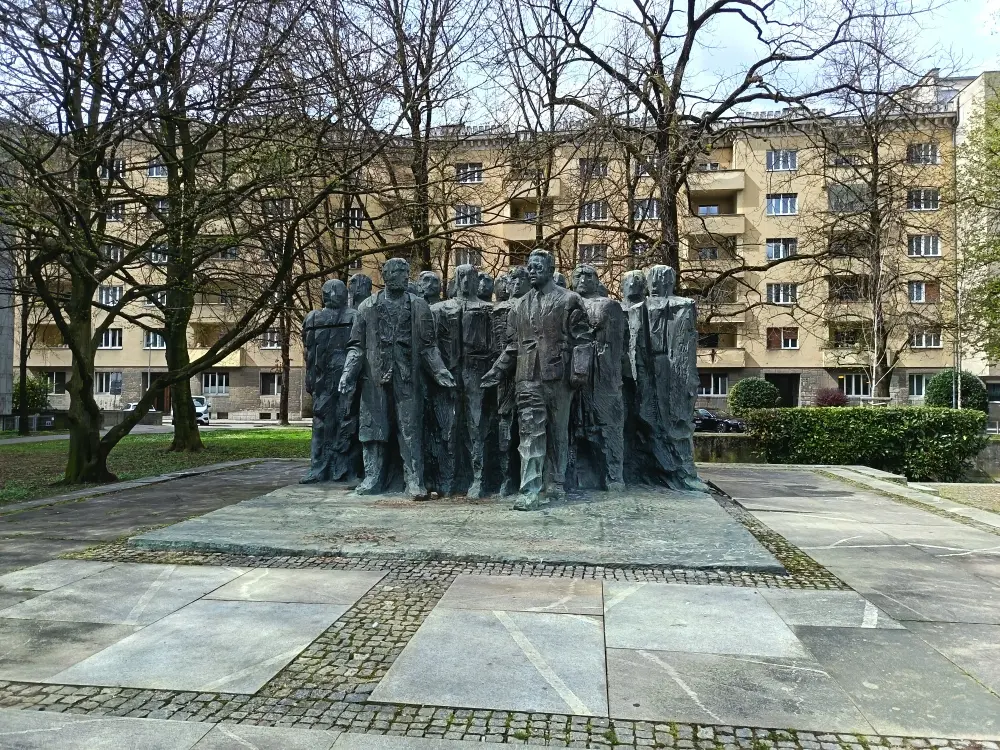
A statue in Ljubljana. It depicts a group of people.
A statue in Ljubljana. It depicts a group of people. The work depicts the communist politician Edvard Kardelj leading a crowd of faceless people.
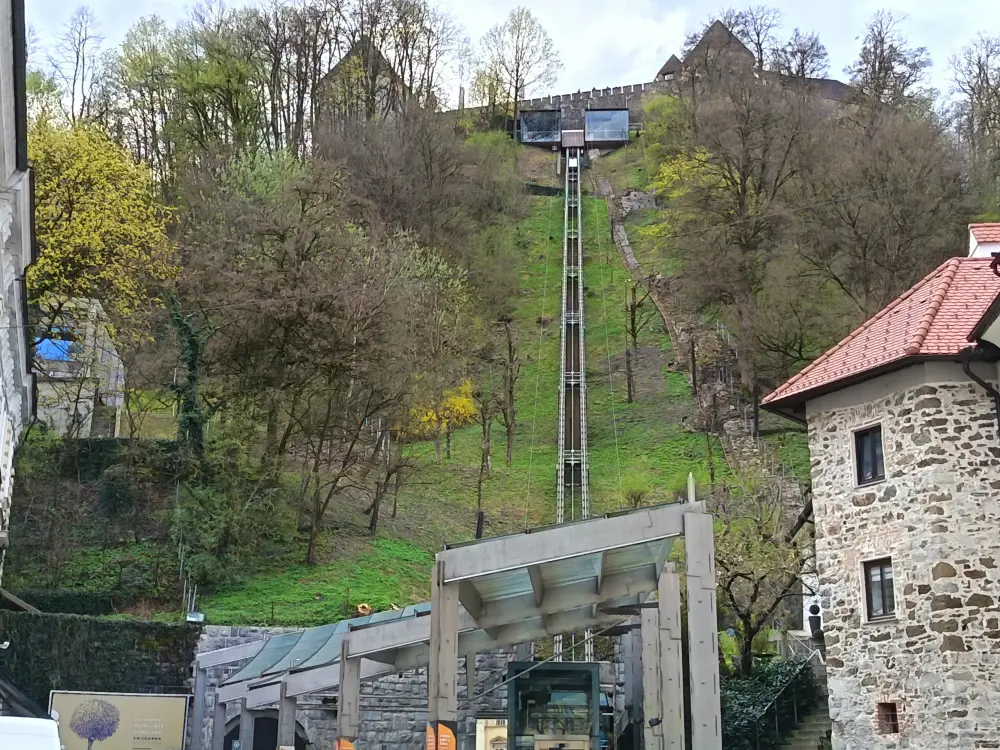
A castle on a high hill. An elevator takes people there.
A castle on a high hill. An elevator takes people there. The picture shows Ljubljana Castle ( Ljublianski grad) and its hillside lift, the funicular.
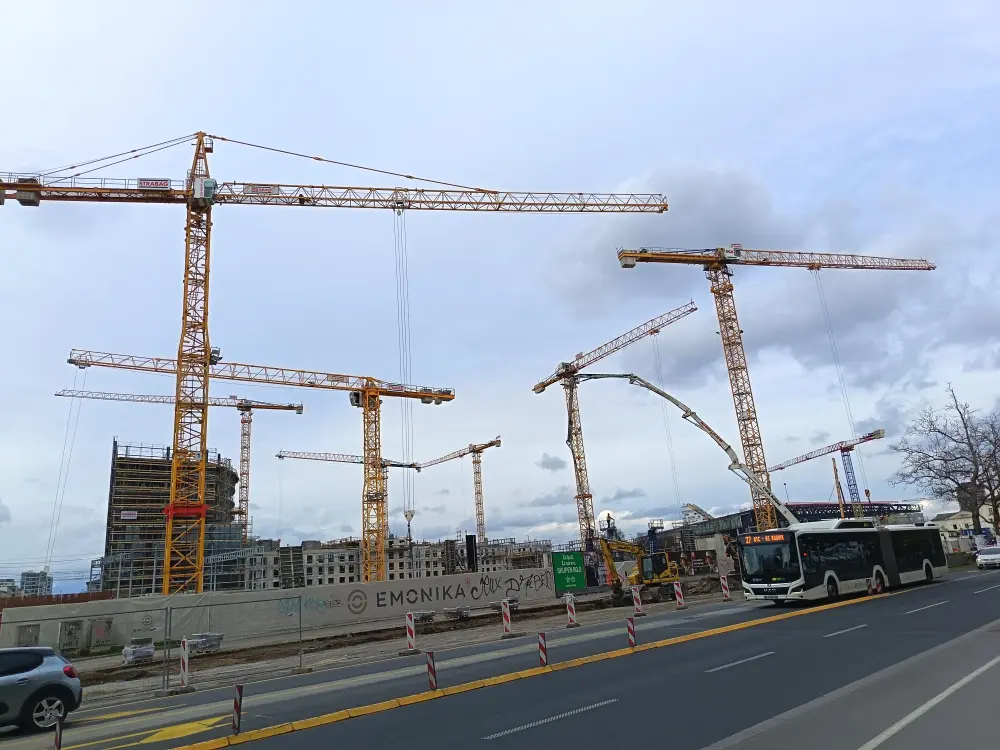
Cranes in the center of Ljubljana.
The center of Ljubljana is being built rapidly. As many as nine cranes fit into one picture.
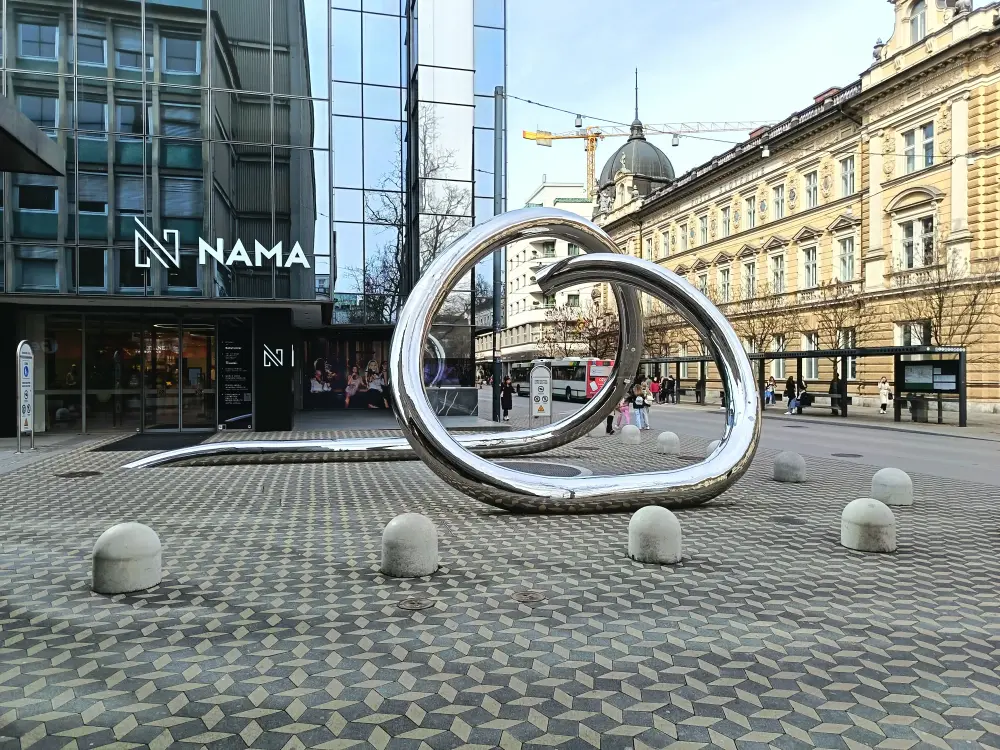
A pipe-like artwork in the center of Ljubljana.
A pipe-like artwork in the center of Ljubljana. It is an interactive water sculpture and fountain. It is intended to serve as a landmark and a place where city residents can gather.
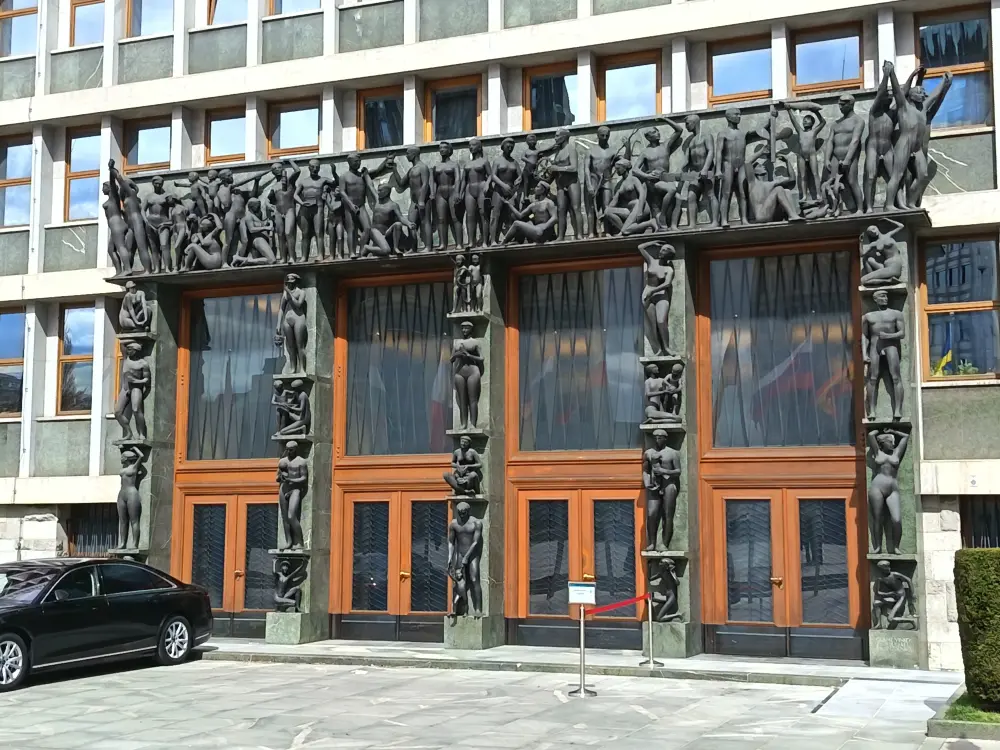
A particularly artistic entrance in Ljubljana.
A particularly artistic entrance in Ljubljana. The image shows the Slovenian Parliament building. The building is known precisely for this unusually ornate entrance.

Zagreb March 28-30

Zagreb is the capital and largest city of Croatia. It is in the north of the country, along the Sava river, at the southern slopes of the Medvednica mountain.
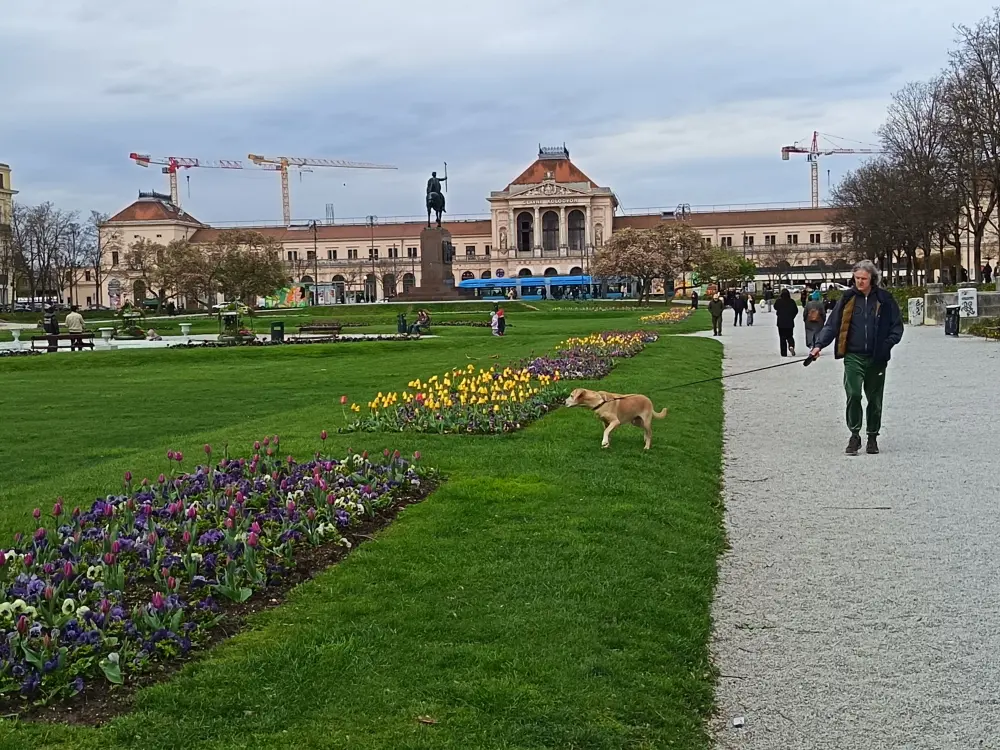
Park in Zagreb
There is plenty to see in Zagreb. Among other things, beautiful parks.
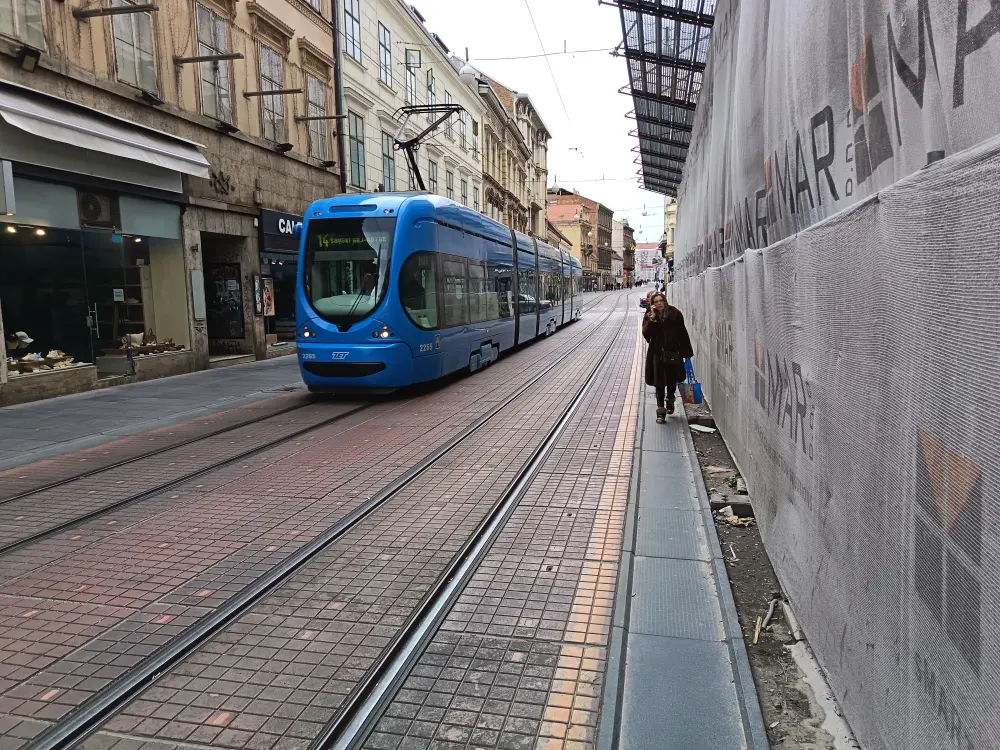
A tram on a street in Zagreb
A tram on a street in Zagreb. Trams are a common sight in Zagreb. They are used a lot.
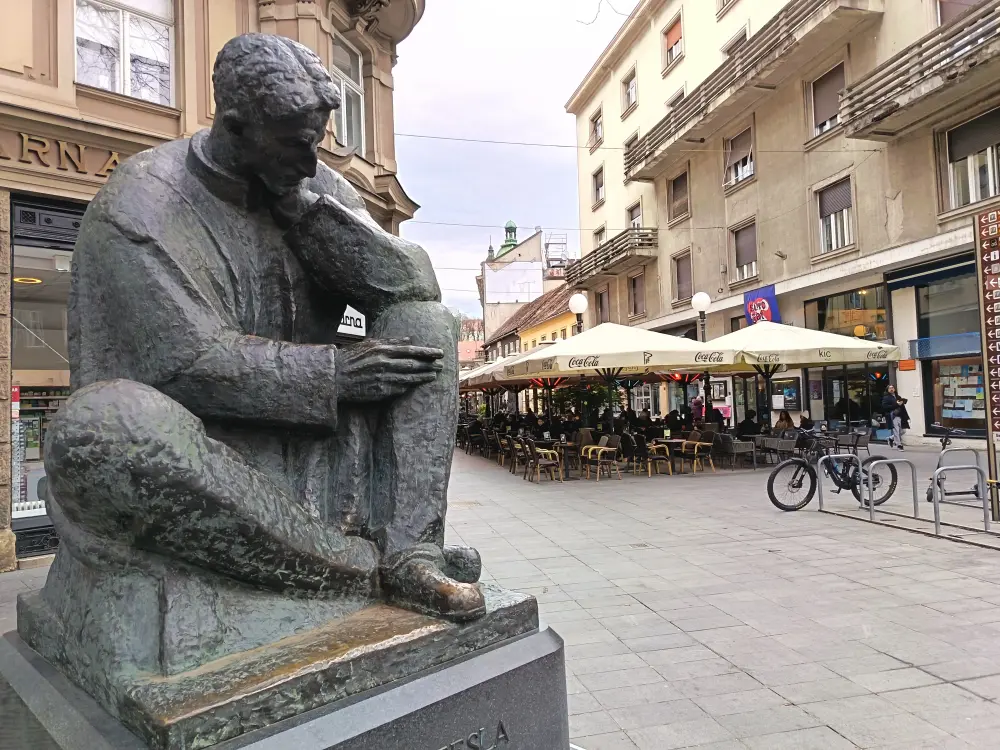
Statue in Zagreb
A statue in the restaurant area of Zagreb. I wonder what this man is thinking?
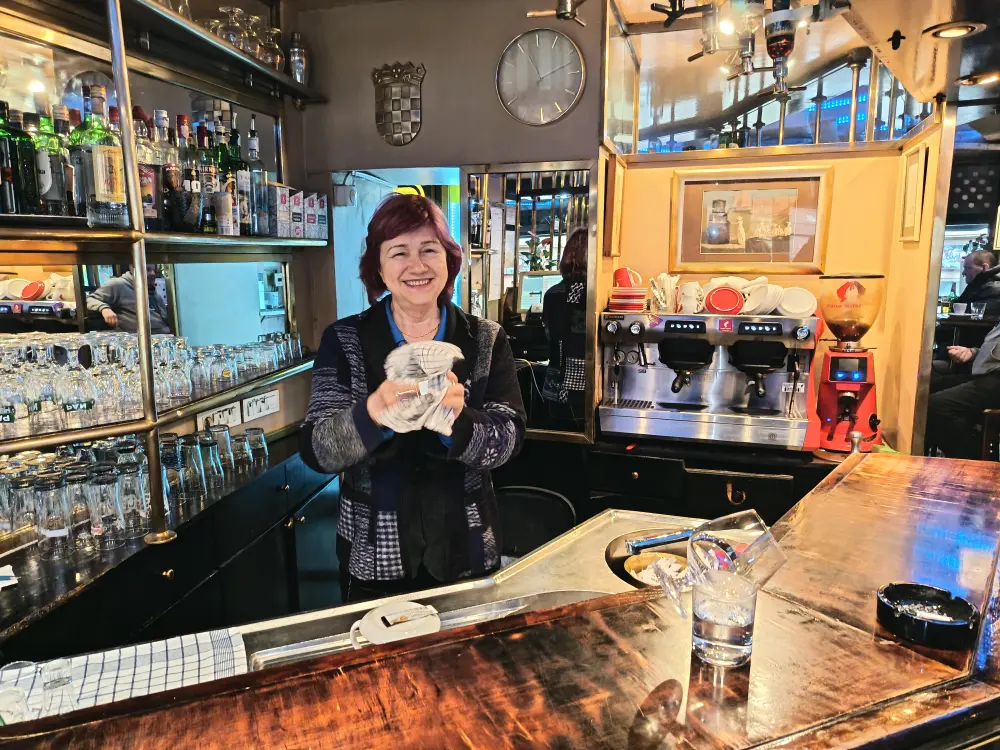
Seniha Grujčić runs caffe AG restaurant in Zagreb.
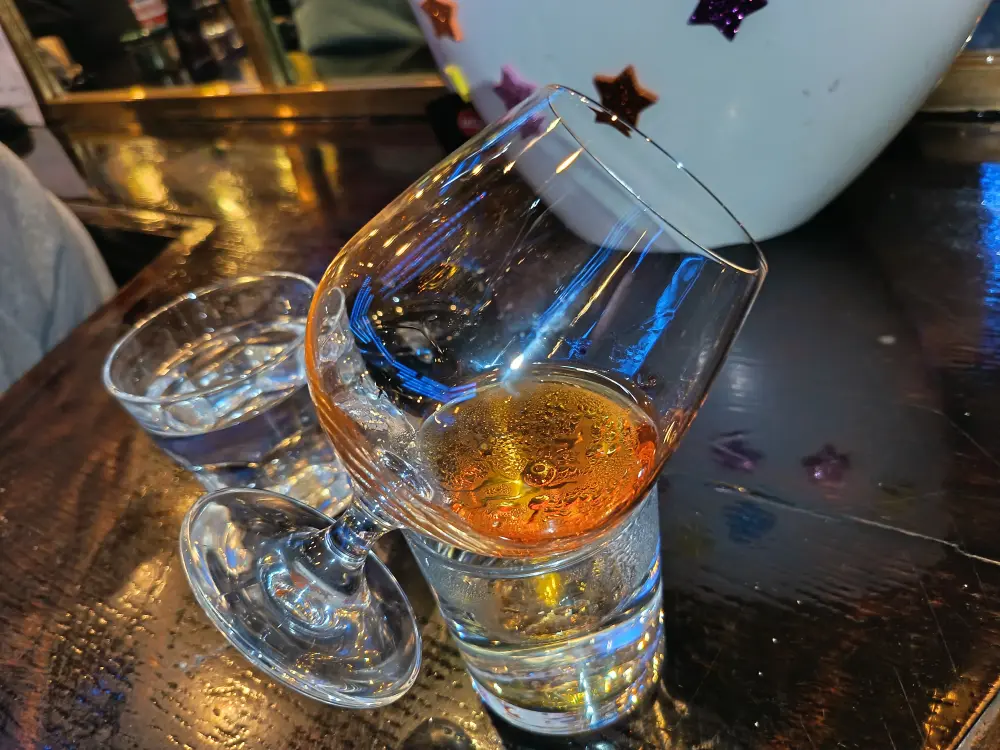
The drink is kept at a suitable temperature when it is placed on its side on top of a glass of water.
The drink is kept at a suitable temperature when it is placed on its side on top of a glass of water. This is Senihan's specialty.
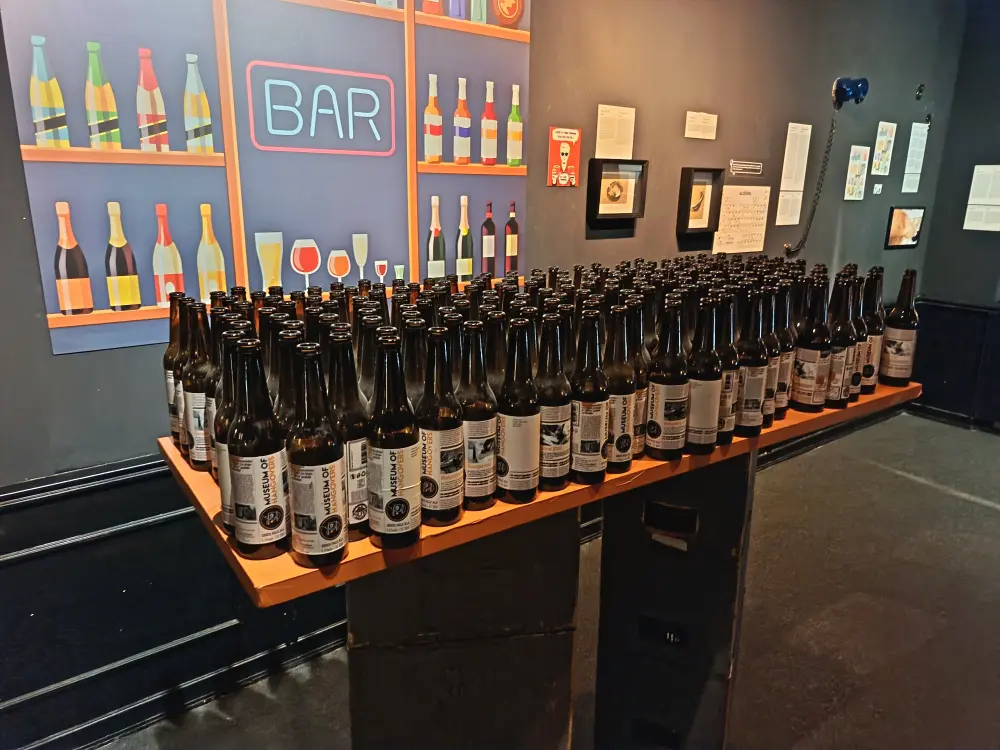
Museum of hangoves entrance.
The Museum of Hangovers is not serious-minded, although a hangover can be a serious matter.
Bottles in the Museum of Hangovers.
They say on their website: "We are an ambitious young group of people from Croatia who joined forces and brought you the world's only hangover museum.

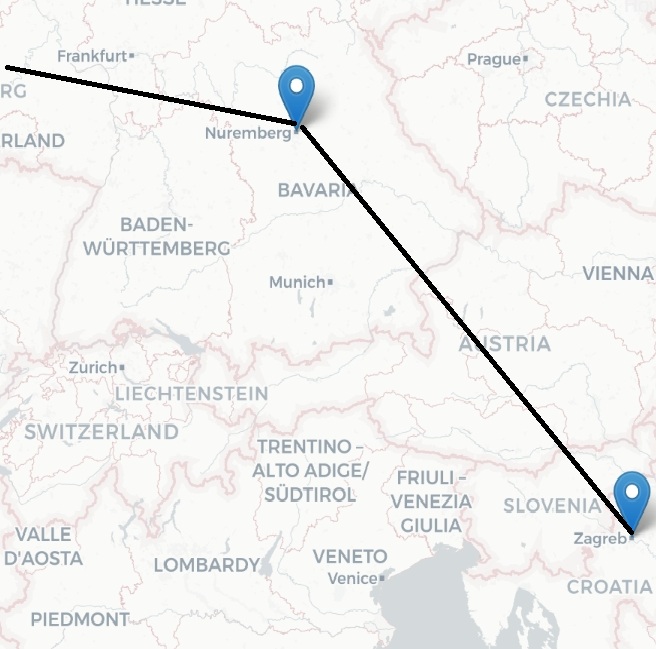
March 28th. The train journey from Nuremberg to Zagreb took 11 hours.

Train departing from Nuremberg to Zagreb.
Train departing to Zagreb.
A map where Nuremberg and Zagreb are connected by a line.

Nuremberg 25th-28th March

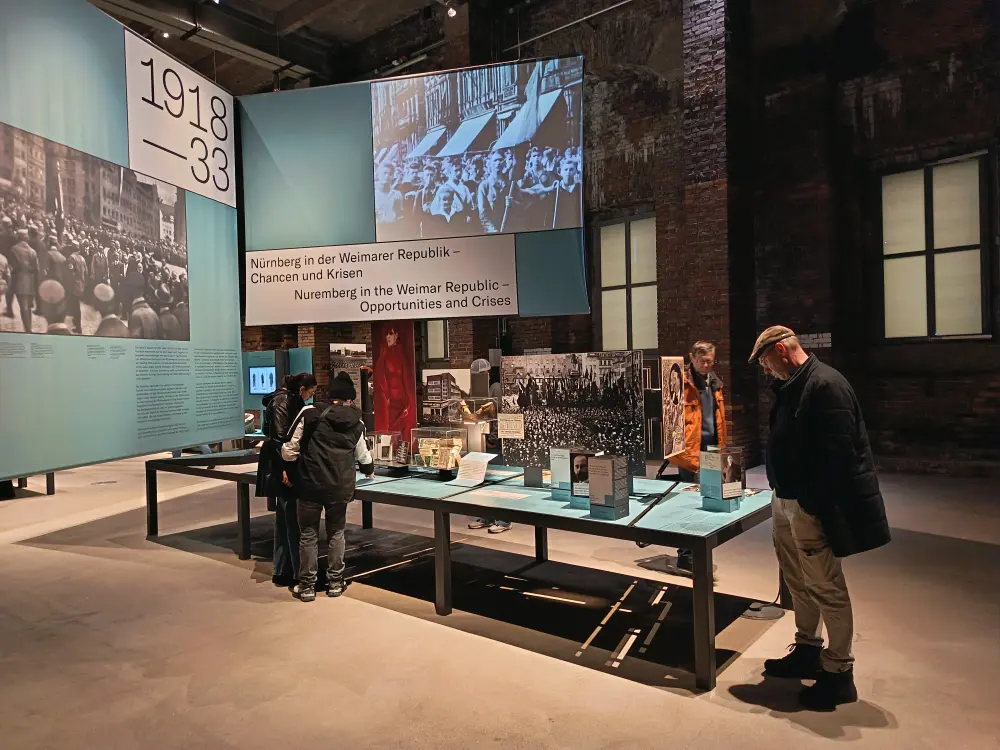
The Nuremberg rallies were a series of celebratory events coordinated by the Nazi Party and held in Nuremberg from 1923 to 1938.

An exhibition has been made about the Nazis' gatherings in Nuremberg

The exhibition has been made at the Nazis' meeting place

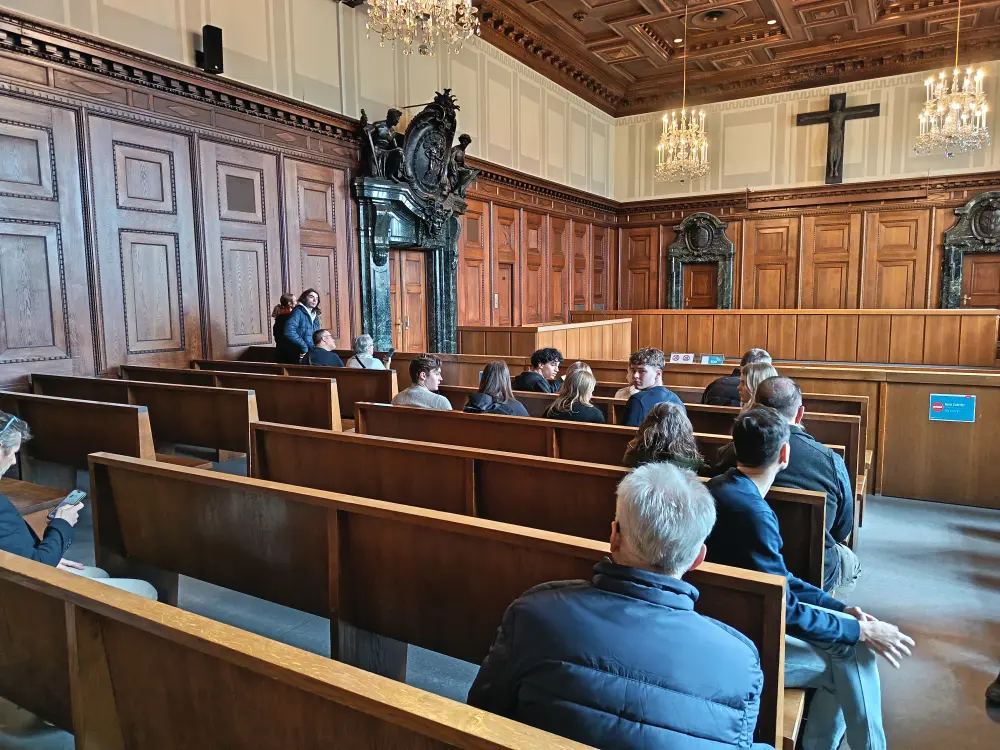
The courtroom of the Nazi trials

The Nuremberg Trials held in Nuremberg, Germany, were a series of trials in which high-ranking Nazis were convicted in order to hold them accountable for starting the war and for war crimes and crimes against humanity during World War II.

Courtroom 600 of the Nuremberg Palace of Justice
You can go to the courtroom to take a look.

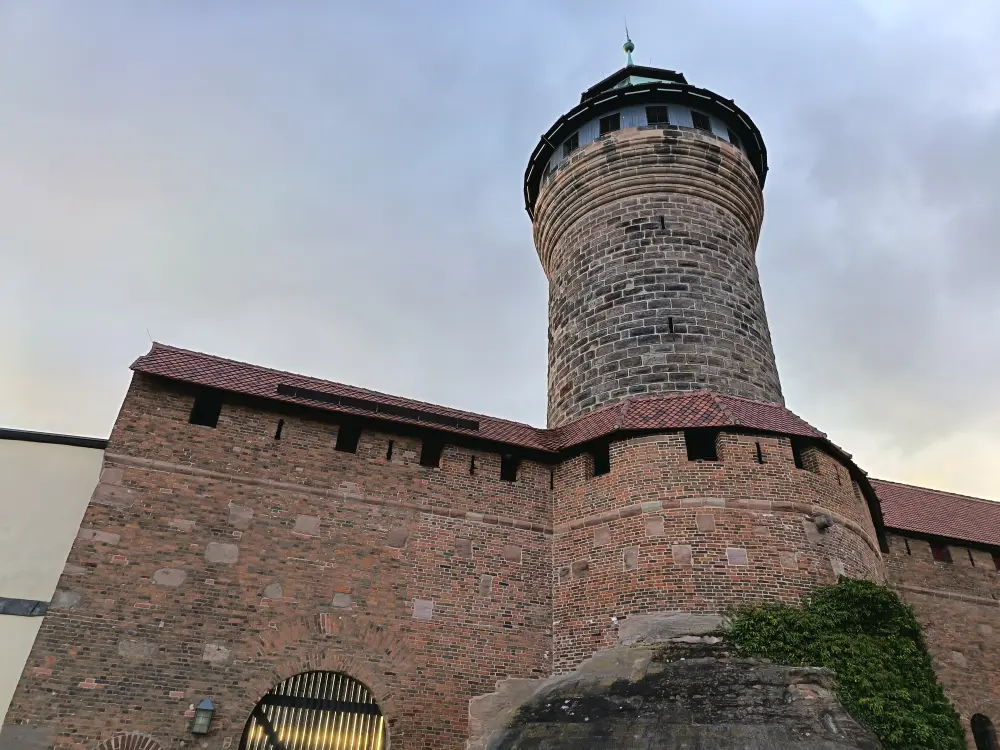
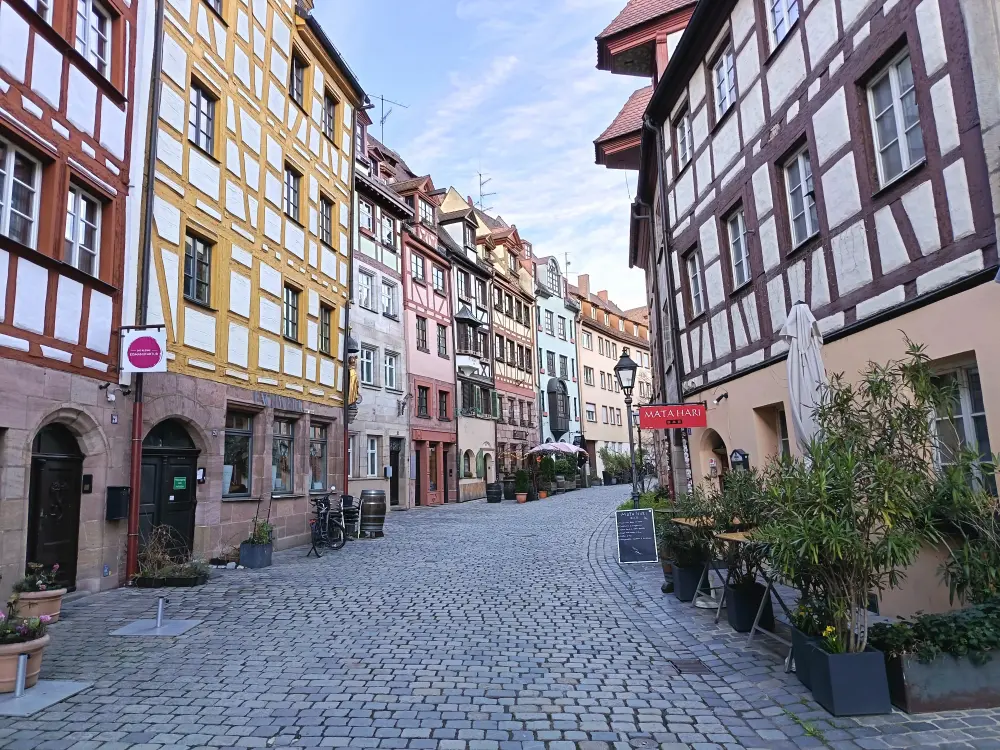
Nuremberg has more to see than war and Nazi history, including a beautiful old town.

Castle in Nuremberg

In the old town, there are houses where the frame structures are intentionally visible.

Street view in Nuremberg

Wuppertal and Bonn March 21-24

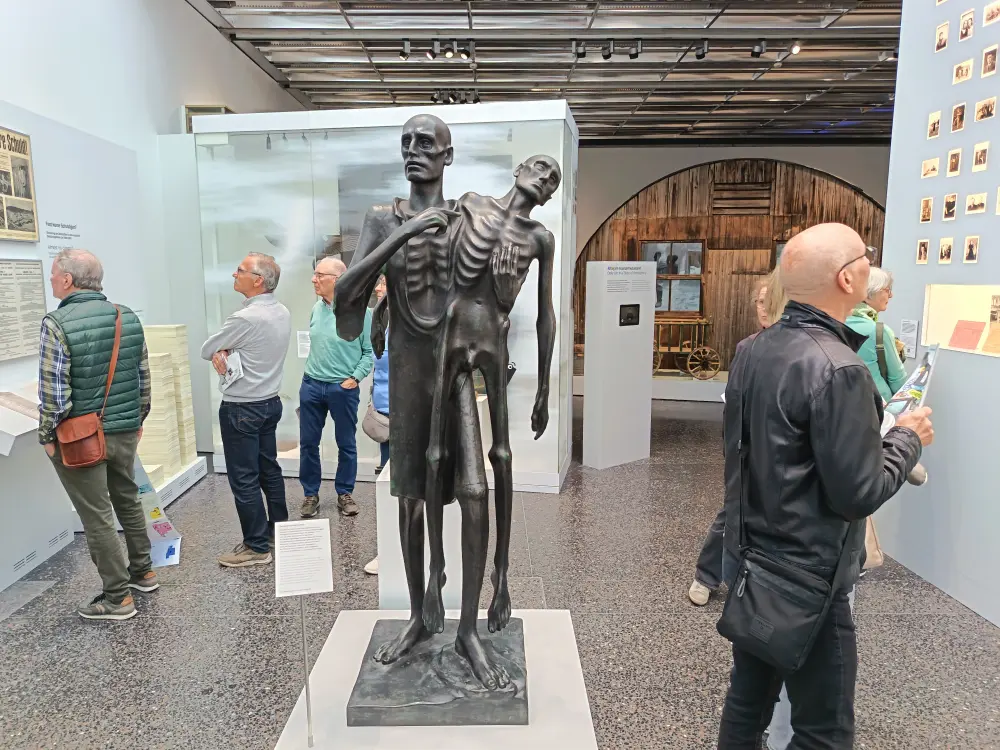
An exhibition about the end of the Second World War and life afterwards is on display at the Bonn Museum. The sculptor Fritz Koelle created his sculpture 'Inferno' as a design for a monument on the site of the former Dachau concentration camp.

Statue in the Bonn museum. Sculptor Fritz Koelle's sculpture 'Inferno'

At the exhibition, you can experience how Germany has developed into an established democracy since 1945.

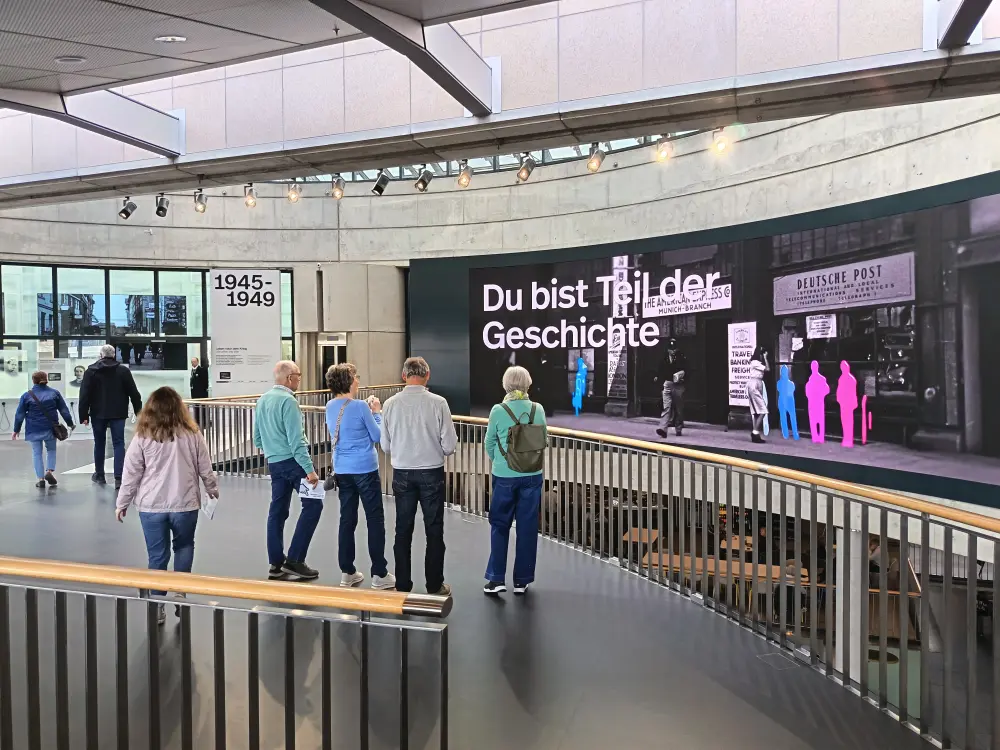
An exhibition in a Bonn museum presenting the post-World War II period in Germany.

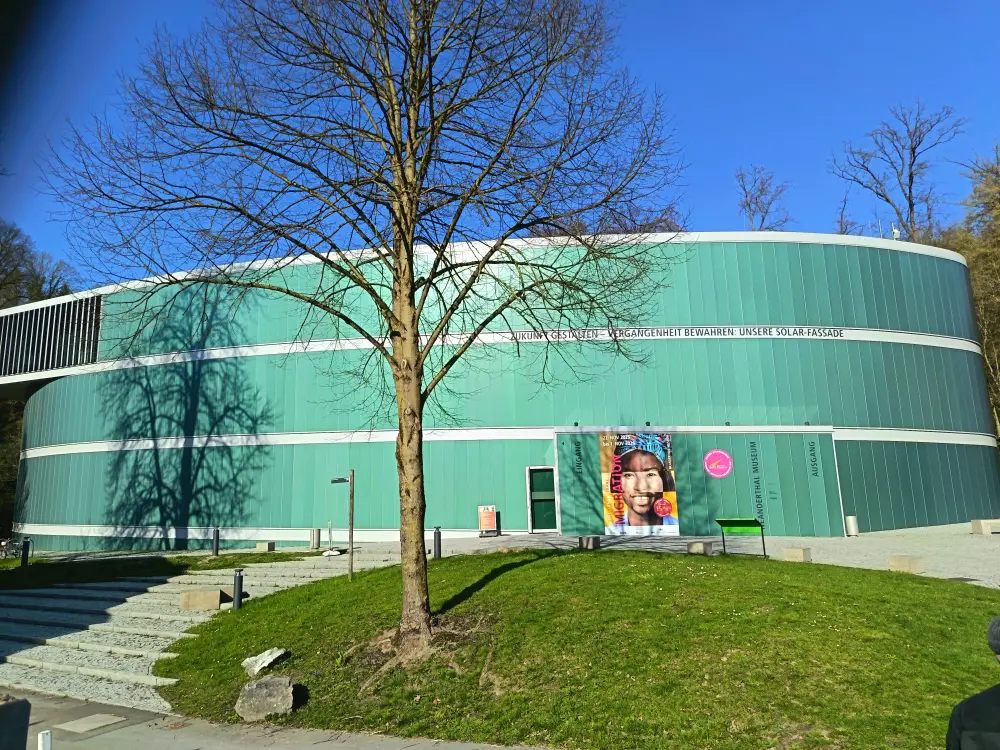
The Neanderthal Museum is a museum in Mettmann, Germany. It was established in 1996. Located at the site of the first Neanderthal man discovery in the Neandertal, it features an exhibit centered on human evolution.

The Neanderthal Museum is near Wuppertal. The original excavated site where fossils of Neanderthal man were found is close to the museum.

Museums and suspension monorail

The journey now heads south from Bonn in West Germany. First to Nuremberg and later to Zagreb.

Here are still some pictures from previous travel days in Wuppertal and Bonn.

Wuppertal and Bonn March 21-24

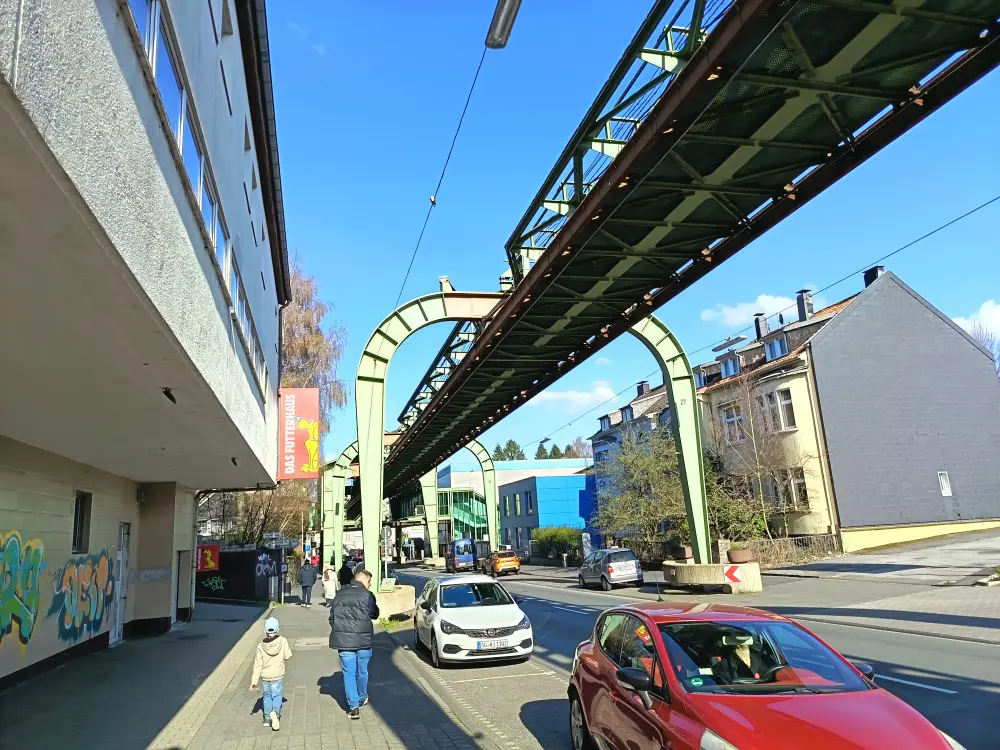
Wuppertal suspension monorail travels 13 km through the city. The cars are suspended from a single rail built underneath a supporting steel frame. The network runs mainly above the city’s river Wupper, only four of the 20 stops run above solid ground. 

The Wuppertal suspension monorail.

On the way to Wuppertal, Bonn, and Nuremberg

19th and 20th of March: Essen and Dusseldorf

Essen lies in the larger Rhine-Ruhr metropolitan region. Two rivers flow through the city: the Emscher in the north, and in the south the Ruhr River.

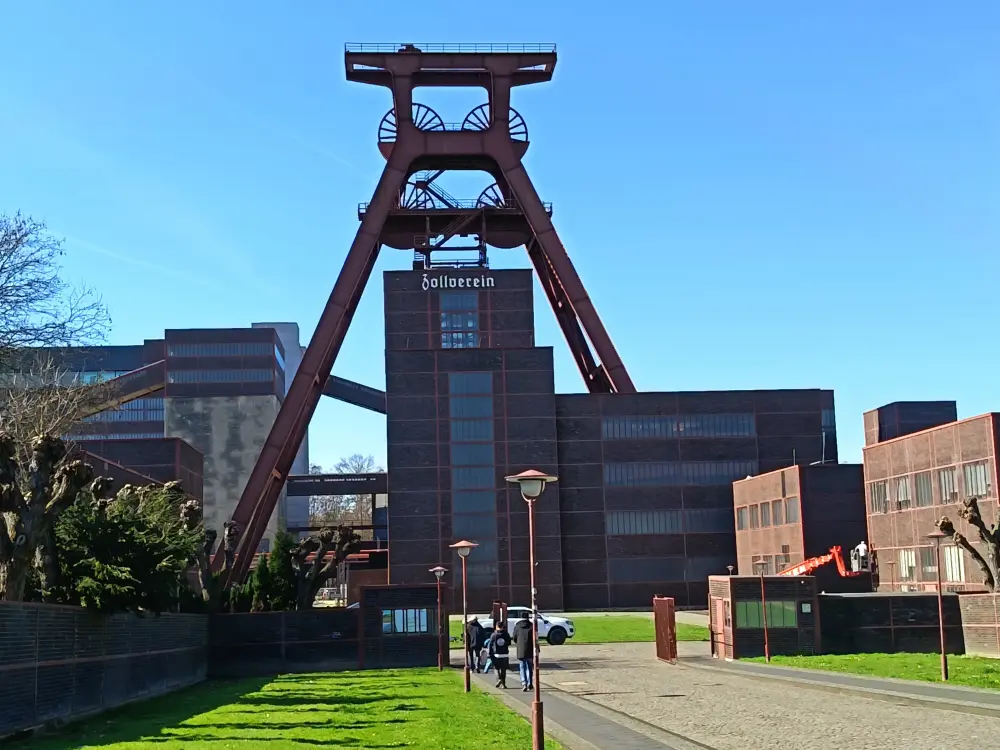
Zollverein Coal Mine Industrial Complex.
Zollverein Coal Mine Industrial Complex. UNESCO World Heritage Zollverein.

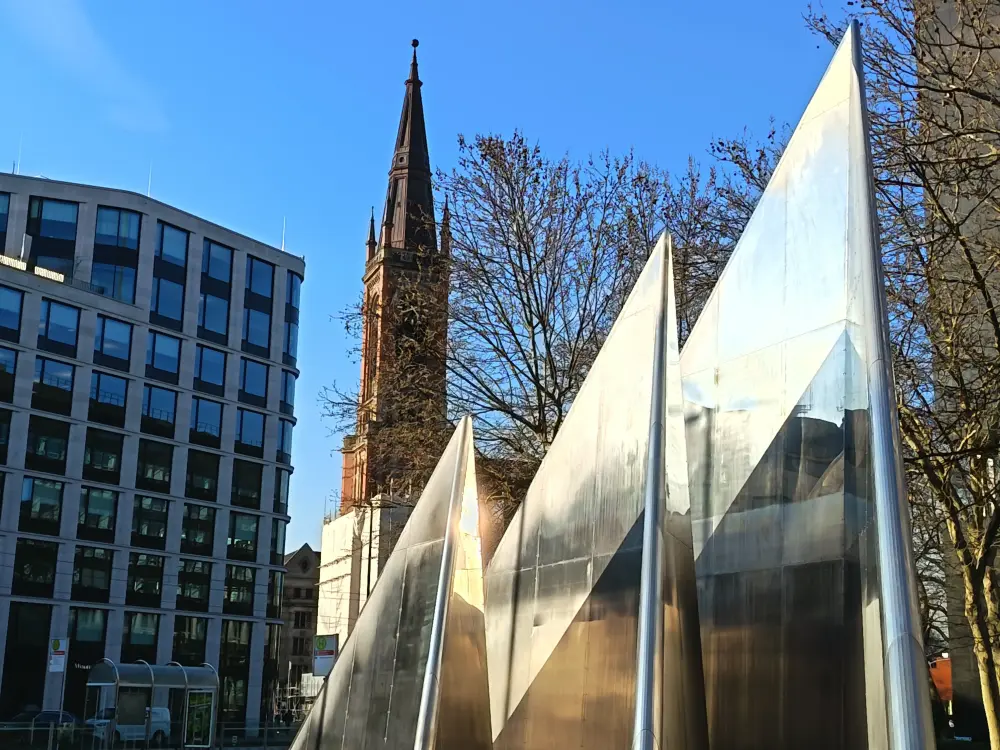
Düsseldorf is the capital of the state of North Rhine-Westphalia. The city has a population of over 650,000 inhabitants.

Art and a church in Düsseldorf.

The Aalto Theatre in Essen. It is home to the city’s opera company Aalto-Musiktheater and the ballet company Aalto Ballett.

The Aalto Theatre in Essen.
The Aalto Theatre in Essen. The design by the Finnish architect Alvar Aalto was the unanimous winner in a competition in 1959, but the building was begun only in 1983, seven years after Aalto's death.

17th and 18th of March

From Stockholm to Hamburg

When traveling from northern Sweden to Stockholm by night train and continuing with another night train, a day is left to explore Stockholm.

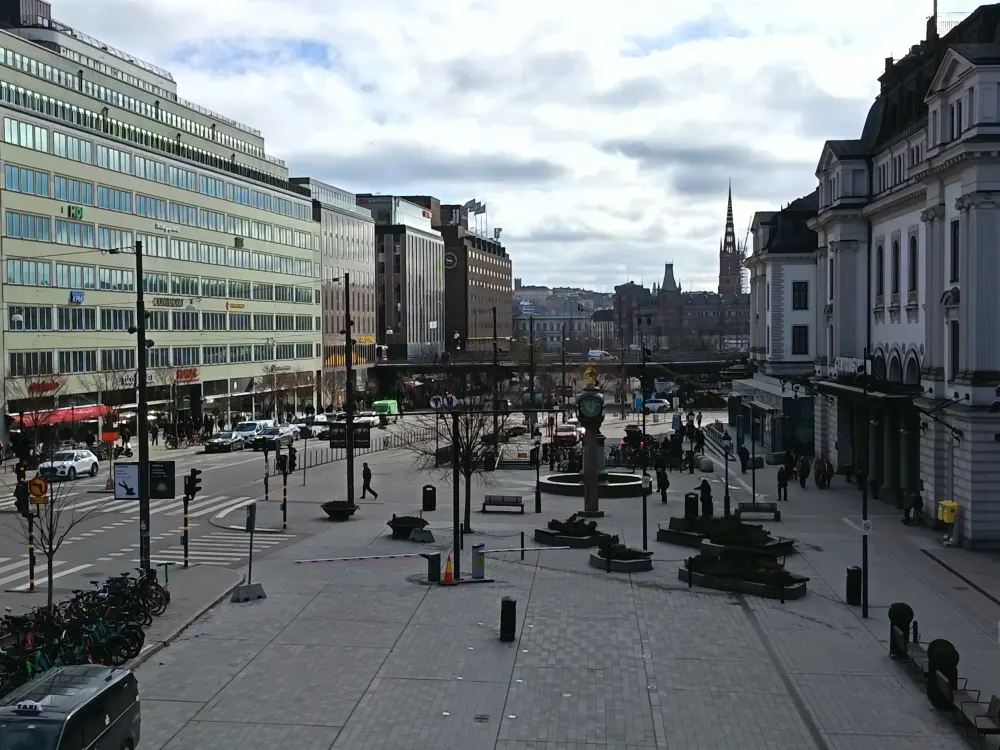
Street view in Stockholm.

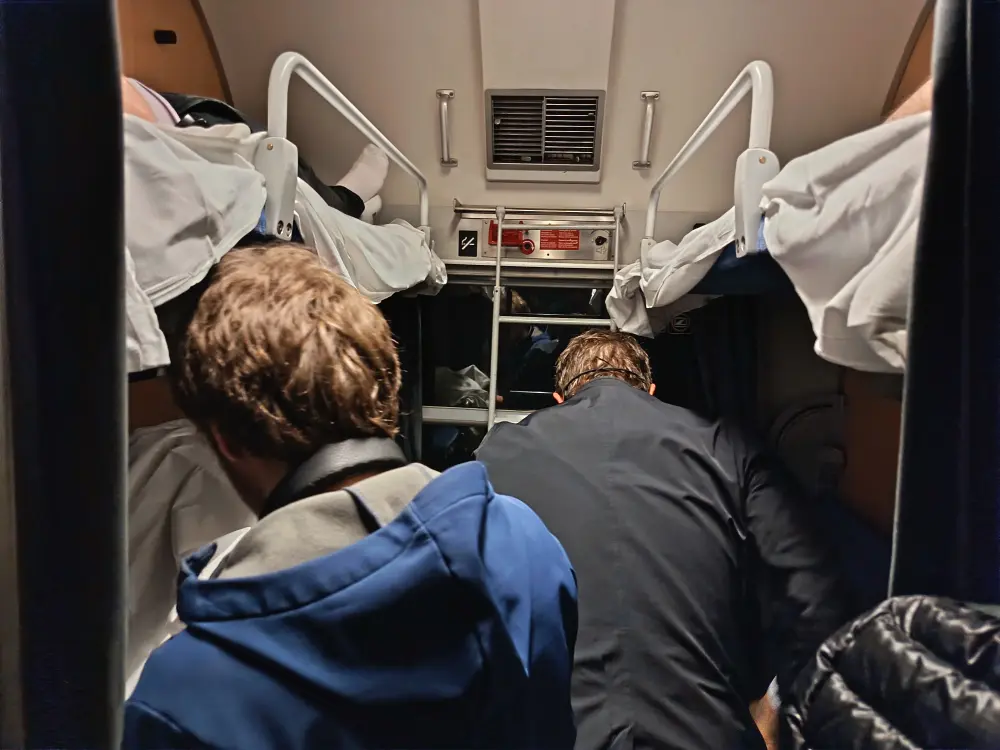
If you cannot book a sleeping place on the train, you can get a slightly cheaper sleeping place. There are more passengers there, and you have to put the sheets and pillows yourself for the night. The crowding can be annoying.

The people traveling in the train's sleeping car prepare the beds for the night.

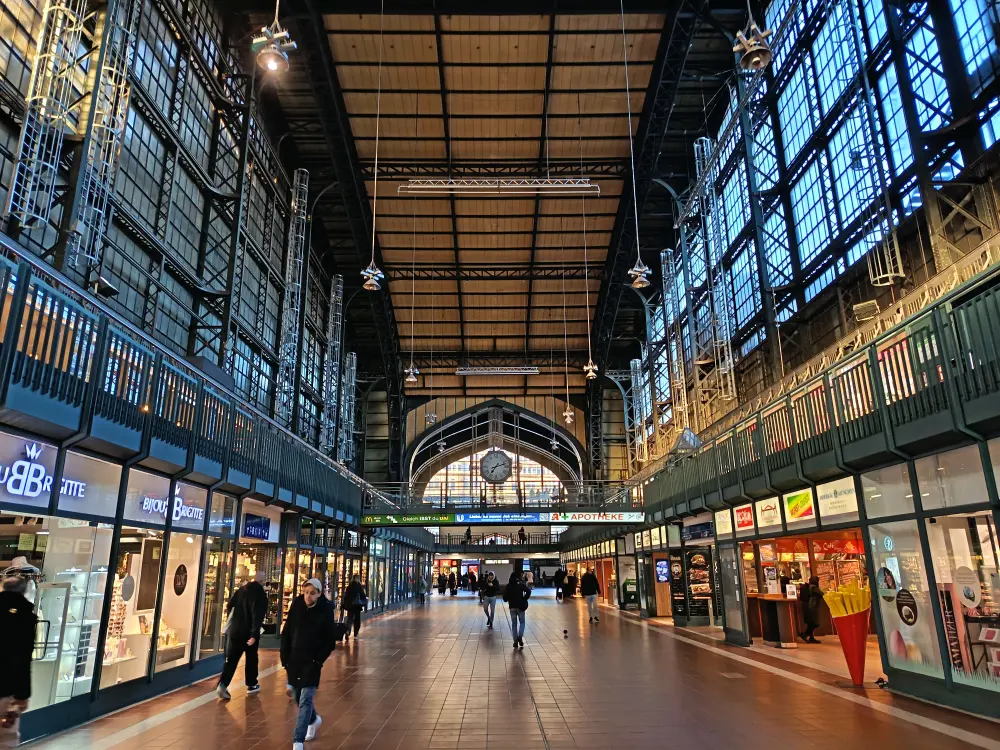
Trains leave Hamburg in every direction. While waiting, you can admire the station building.

Hamburg's beautiful main railway station.

Welcome to follow my eighth train and bus journey to Europe

I meet four different families of friends on the way

I have met people from all over Europe through the BeWelcome and Servas communities. People in these communities host each other. I have been a guest myself and have also hosted people.

During my trip, I will be a guest in Essen, Wuppertal, Bonn, and Copenhagen.
I usually book accommodation two months before the trip

I have noticed that, for example, an Airbnb booking is best made two months in advance. Prices are usually cheaper then. The downside is that you have to stick to the plan.
Now I was thinking of making reservations during the trip a day or two in advance. There are still cheap accommodations available then, but of course it’s more of a gamble.
16th and 17th day of March

My journey from Haparanda has begun

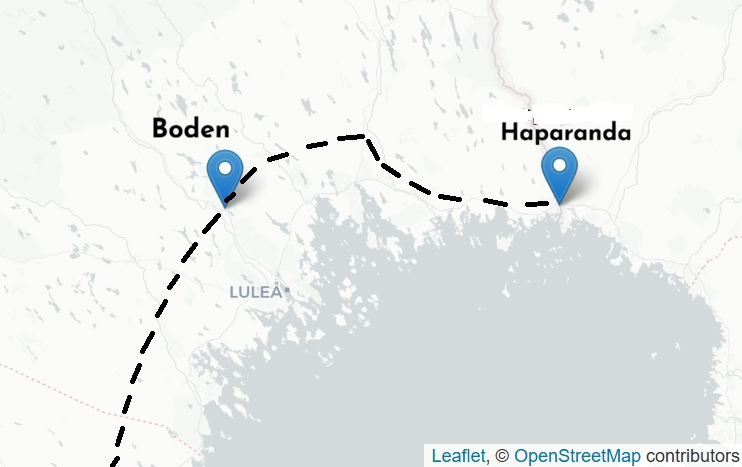
Rail map, with Haparanda and Boden
Haparanda railway station
Haparanda railway station in northern Sweden. I started my journey from there.

On the evening of Monday, March 16, I will first travel by train from Haaparanta, near the Finnish border, to Boden. In Boden, I will board a night train that will take me to Stockholm. From there I continue to Hamburg, Wuppertal, Bonn, and Nuremberg

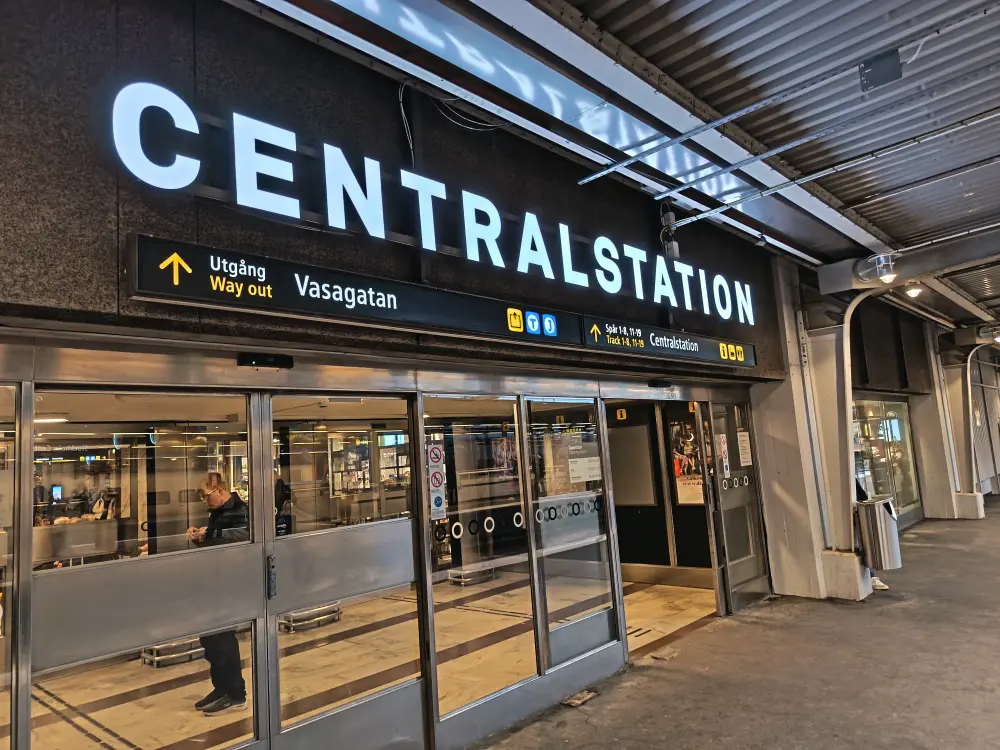
Stockholm Central Station
Stockholm Central Station. I will spend the next day in Stockholm. In the evening, I will get on the night train to Hamburg.

I have previously traveled in Spain, Italy, and Greece by trains and buses. Everything has been well planned in advance.

This time I will leave some of the accommodations unbooked. Maybe a last-minute reservation might even be cheaper than one made a month in advance. I have a ten-day Interrail pass. With it, I can travel around Europe.

Add Your Heading Text Here